Falling Waters homeowners face a repair-or-replace call on newer doors. See what a stuck or broken door actually costs to fix, 9 miles from our Martinsburg shop.
Start with the money, because that's the question that actually decides what happens next. Median household income out here runs $87,632, which is real buying power, and it changes the math on a broken door. A homeowner at that income level isn't stretching to cover a $250 spring replacement - the question is whether the door is even worth saving, and in Falling Waters the answer is usually yes.
That's because the housing stock here is newer than a lot of the rest of the service area. Most of this pocket was built after 2000, part of the broader 2000s-era construction that shows up across several named areas we cover. A door installed in 2003 is running standard torsion springs, steel rollers, and a factory opener bracket - parts that are stocked, not special-ordered. That's a different job than the pre-1960 one-piece doors we sometimes pull off houses closer to Martinsburg.
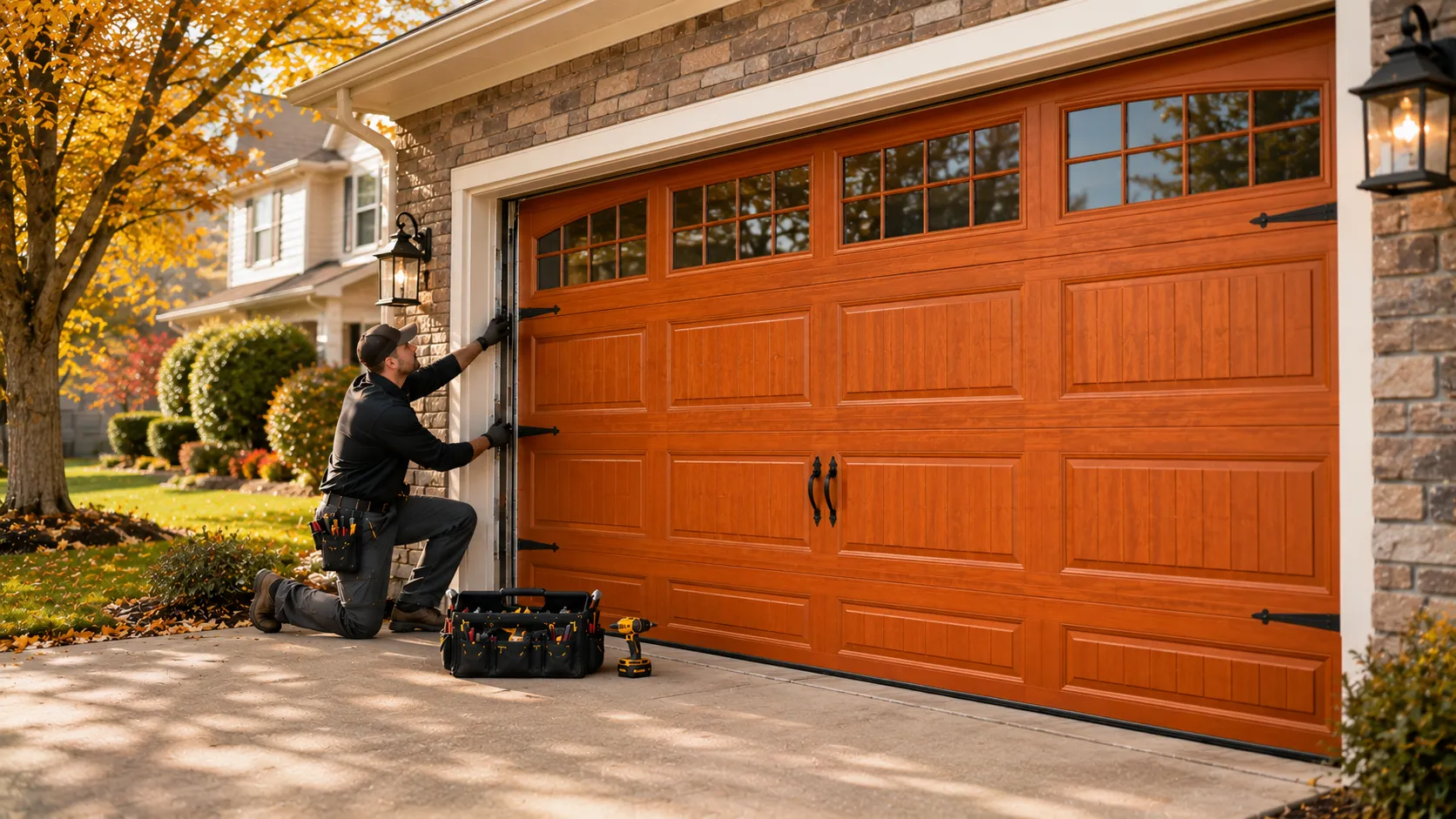
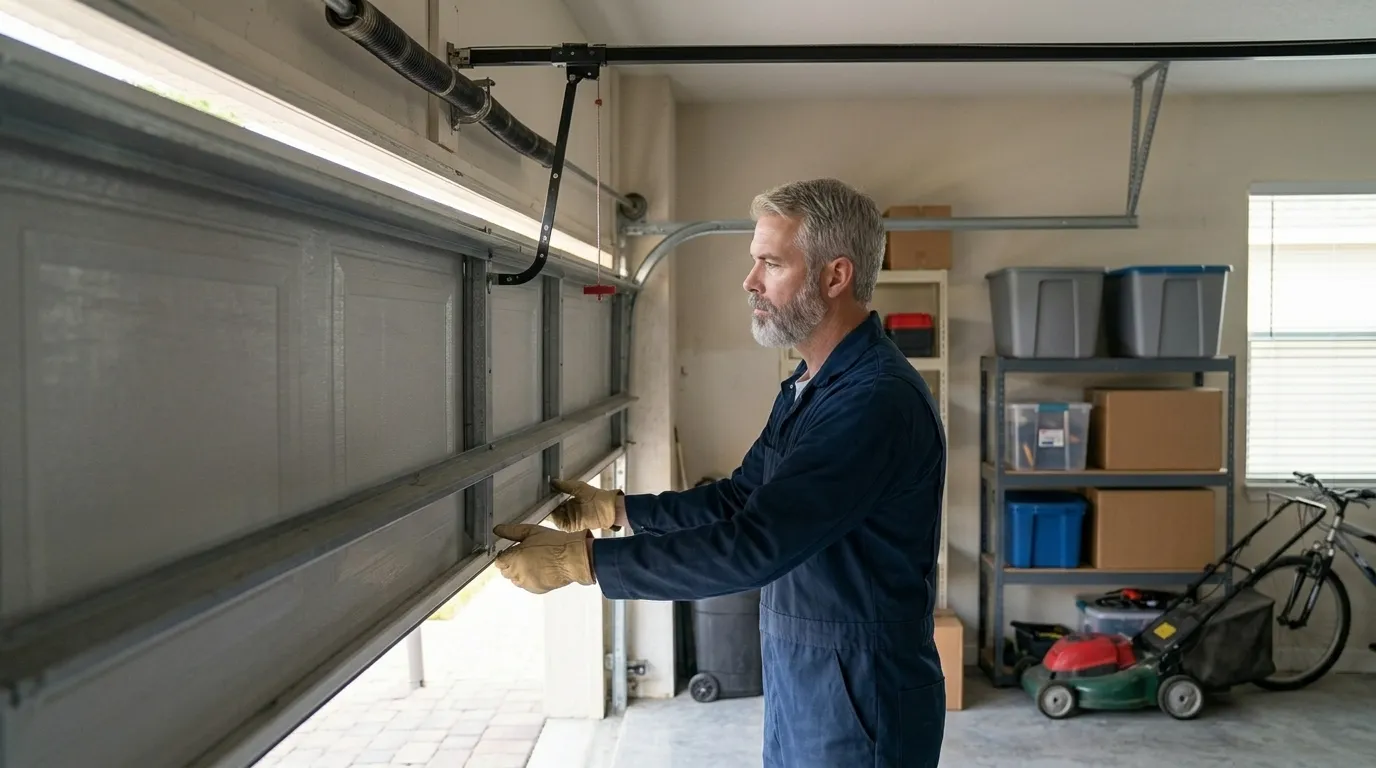
What you're seeing when the door won't move is usually one of three things on a house this age: a torsion spring that's fatigued out on schedule, a sensor knocked out of alignment, or a cable that's frayed off a worn drum. None of those are exotic. They're the ordinary failure points on a 15-to-20-year-old residential door, and they're fixable the same day in most cases - not rebuilt from scratch.
The Cost of This Job
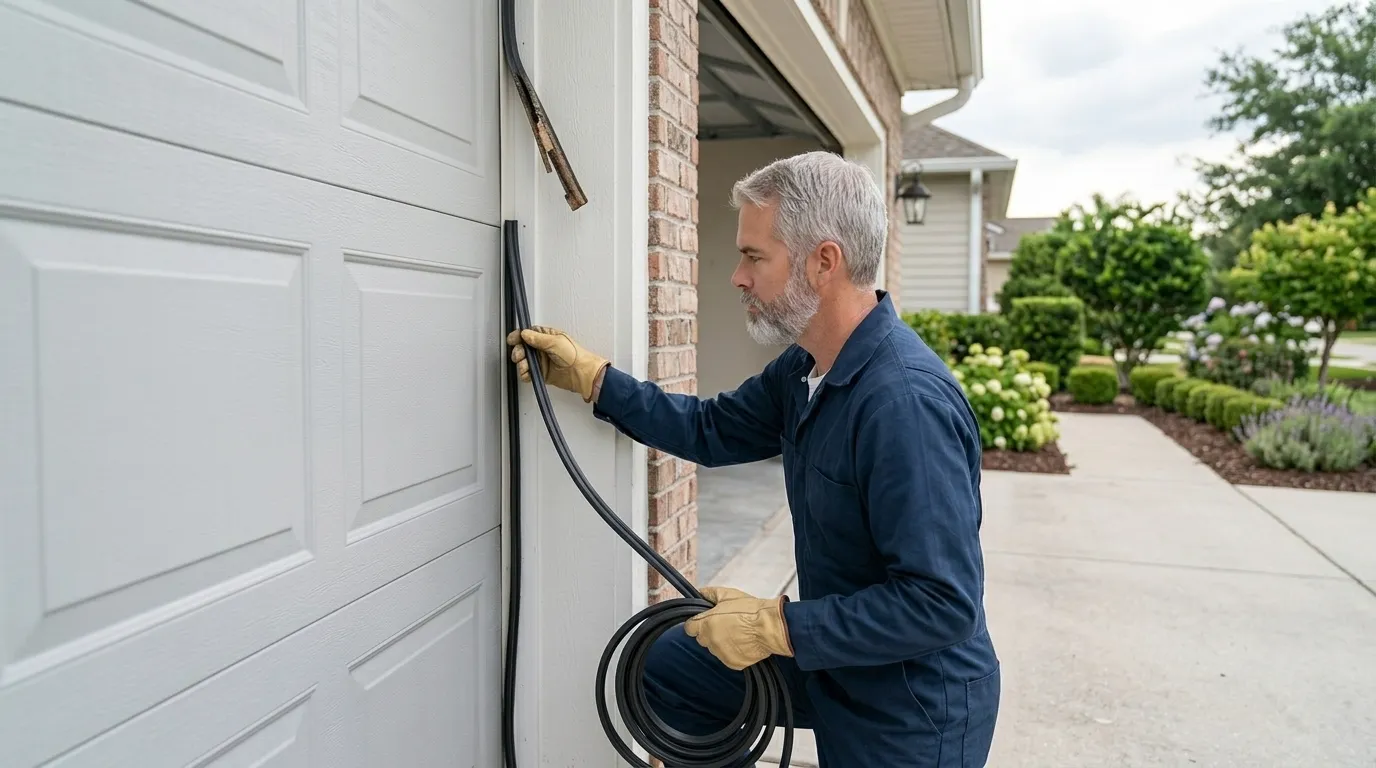
On a door this age, repair beats replace almost every time. A broken spring, a bad sensor, or a snapped cable on a 2000s-built door is a parts-and-labor job, not a teardown. The hardware is standard-size, the track is straight, and the opener is a common belt or chain unit - none of it requires custom fabrication.
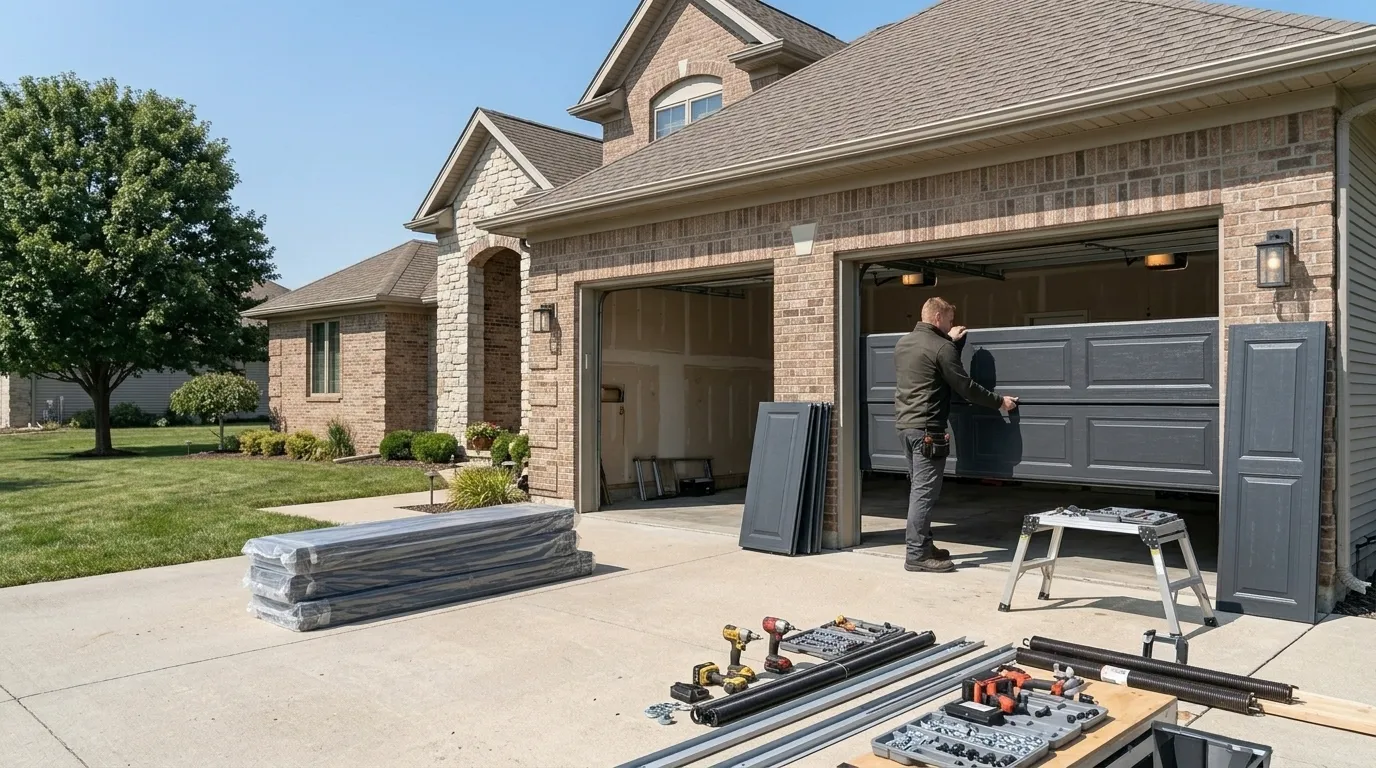
Replacement starts making sense when the door itself is failing structurally: panels delaminating, a track that's bent beyond adjustment, or an opener motor that's died alongside a spring. At the income level typical of this area, most owners choose to fix first and replace only when a second failure shows up within a year or two. We'll tell you straight if a repair is throwing good money after bad - we don't run up a bill on a door that should be replaced instead.
Can You Do This Yourself
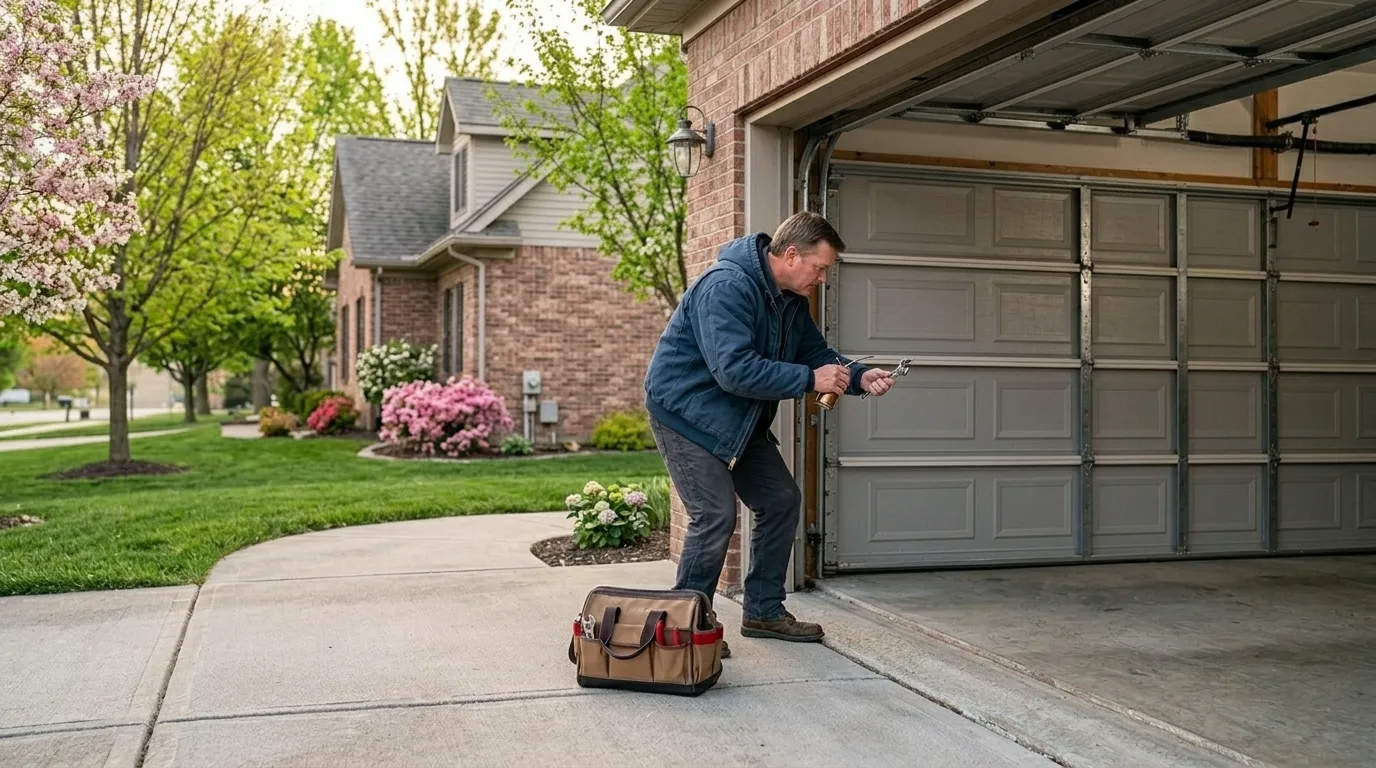
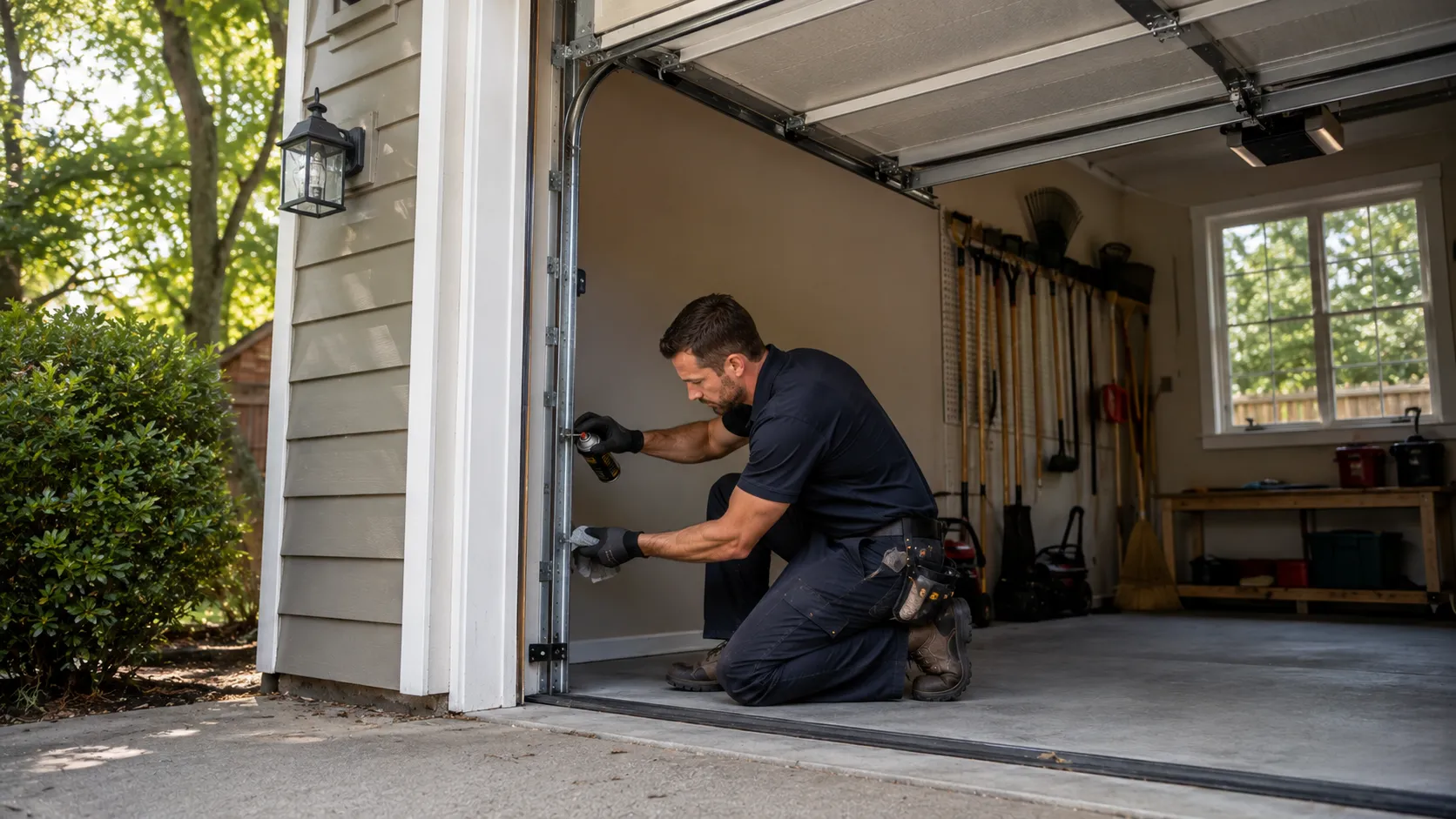
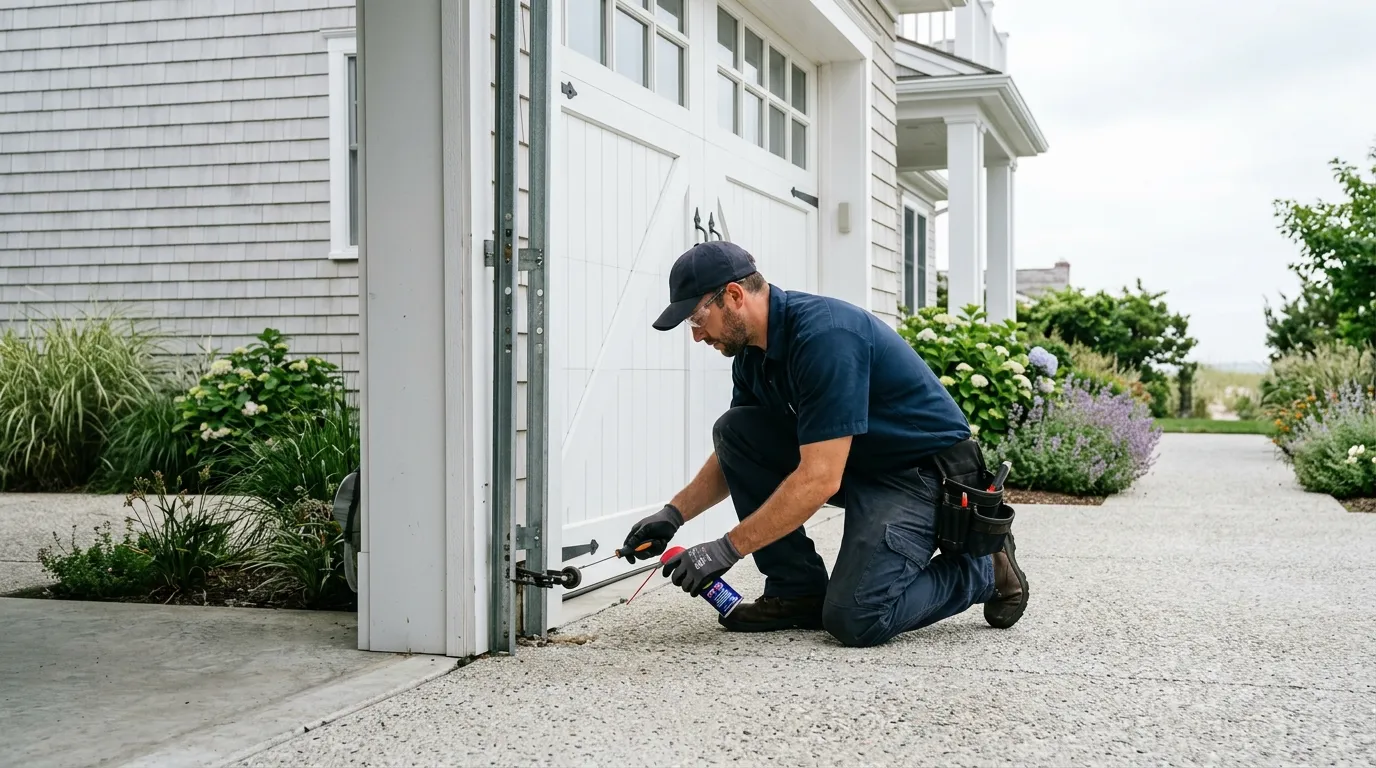
Some of this you can do. Realigning a photo-eye sensor, tightening a loose bracket, lubricating rollers and hinges - all reasonable weekend work, and it solves a surprising number of "the door won't close" calls.
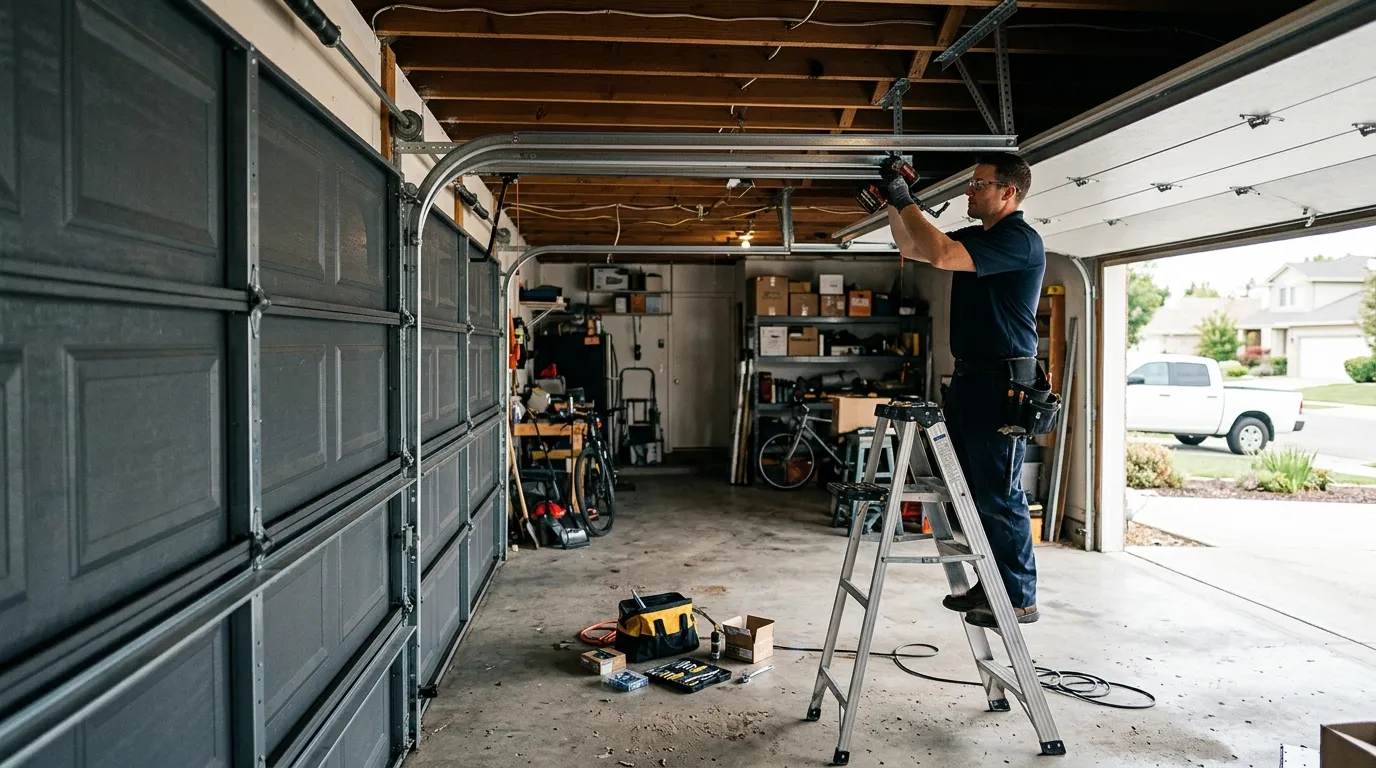
A broken torsion spring is not weekend work. A door spring on a standard residential door is wound under enough tension to break a bone or worse if the winding bar slips, and that risk doesn't go down because the door is newer. Same with a snapped cable under load, or an opener that's grinding because the drive gear stripped - you can diagnose it yourself, but don't put your hands on it once you know what it is. Call it in and let someone with the right bars and clamps do the winding.
How Long You Are Without the Door
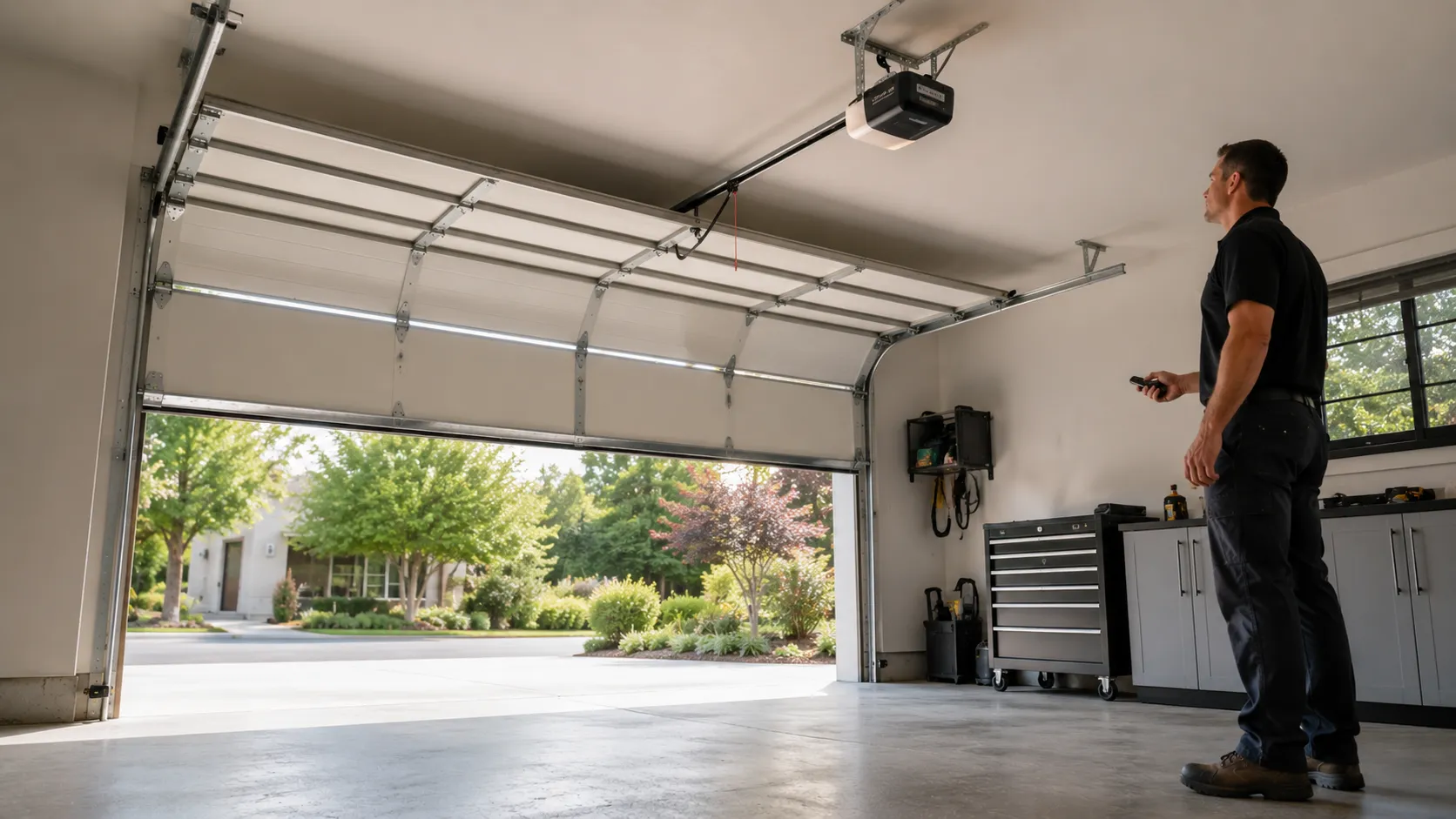
We're honest about this part: we work out of Martinsburg, and Falling Waters is about 9 miles out, so there's drive time built into any visit here. Once we're on site, a spring swap or cable repair on standard 2000s-era hardware is usually a single visit, done in an hour or two, because the parts are the common sizes we already carry on the truck.
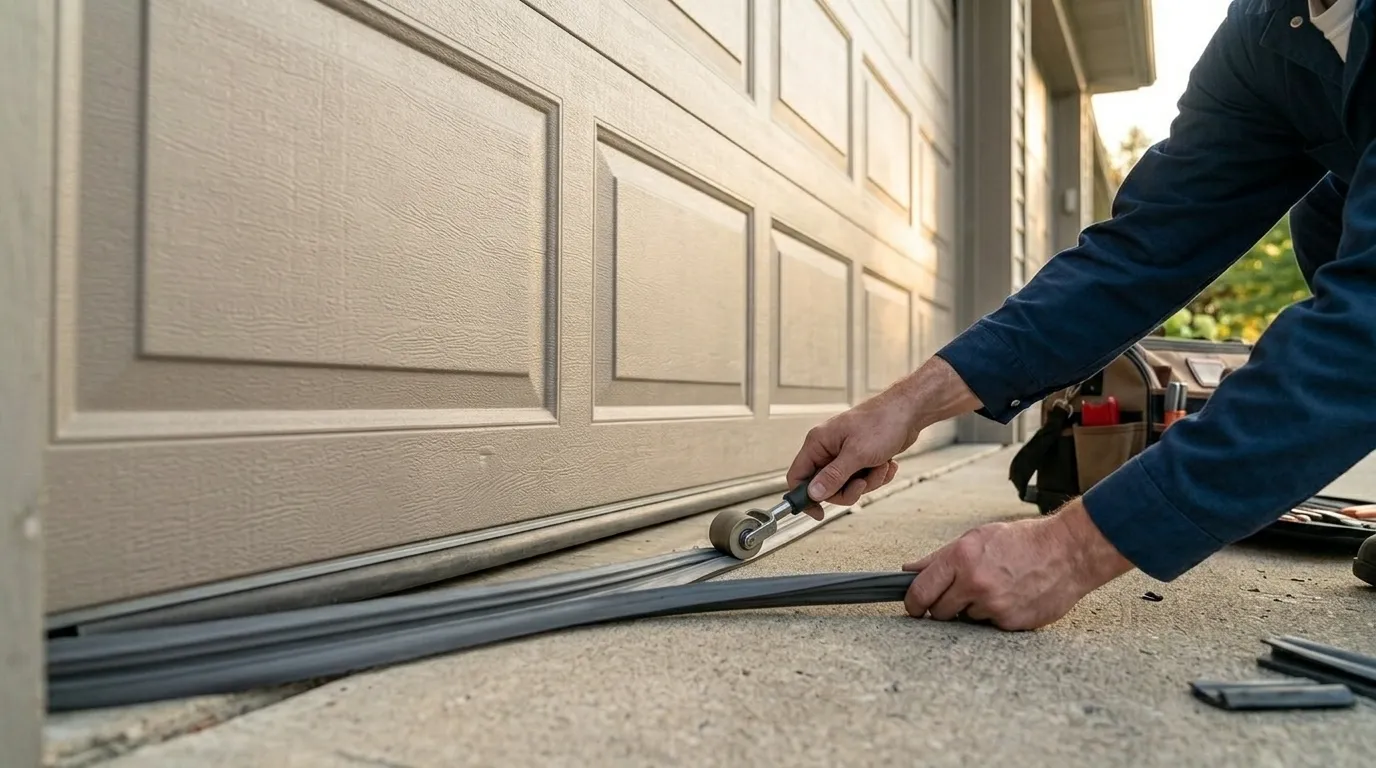
Where it stretches out is winter. This area sits in a cold-climate band with real severe-weather stretches, and a door that's iced at the bottom seal or frozen at the track takes longer to free up safely than the same fault in July. If a part has to be special-ordered - an odd opener model or a discontinued panel - that's the one honest limitation here: we can't make a backordered part arrive faster than the manufacturer ships it.
Booking a Visit
If the door's stuck, making noise, or won't respond to the opener, tell us what you're seeing when you call - that's usually enough to know what's in the truck before we're 9 miles out your driveway. For more on how we cover this specific pocket of the service area, see our Falling Waters garage doors page. For the general emergency repair service across the wider area, that's covered on our Martinsburg emergency repair page.
How it works
From “it’s stuck” to “it’s fixed”
1
Tell us what’s wrong
Describe the symptom - won’t open, loud bang, opener runs but the door won’t move.
2
On-site diagnosis
A technician tests the door under power and by hand and finds what actually failed.
3
Clear, up-front plan
You get the fix that’s needed and what drives the cost - before any work starts.
4
Repaired & tested
The repair is done, the door is set true and tested, and the work area left clean.
Next step
Serving Martinsburg, WV - tell us what your door’s doing and we’ll take it from there.
Is it worth fixing a garage door on a newer house, or should I just replace it?
On houses built in the 2000s, repair almost always wins. The hardware is standard and the parts are stocked, so a spring, cable, or sensor fix is usually a same-visit job. Replacement makes sense once the door itself has structural damage or the opener and a major part fail together.
How far out is Falling Waters from your shop?
About 9 miles from our Martinsburg base. That's factored into scheduling, not into the repair itself - once we're on site, work on standard residential hardware takes the same amount of time it would anywhere else in the service area.
Can cold weather actually break a garage door?
Yes. This area sits in a severe cold-climate band, and ice at the bottom seal or a frozen track can jam a door or strain an opener trying to force it. It's not the same as a broken spring, but it produces the same symptom: a door that won't move.
Ready to get your garage door sorted?
Tell us what it’s doing and where you are in Martinsburg - we’ll take it from there.