The Cost of This Job
We don't post a flat number for maintenance here because what we find on an original 1938-era door versus a door from a later remodel isn't the same job. What we can tell you is what shapes the cost in this particular town: median household income here runs $62,500, noticeably below the $87,632 median across the rest of our service territory, and that's part of why we lean toward tuning up old hardware rather than pitching a full replacement the first time we're out.
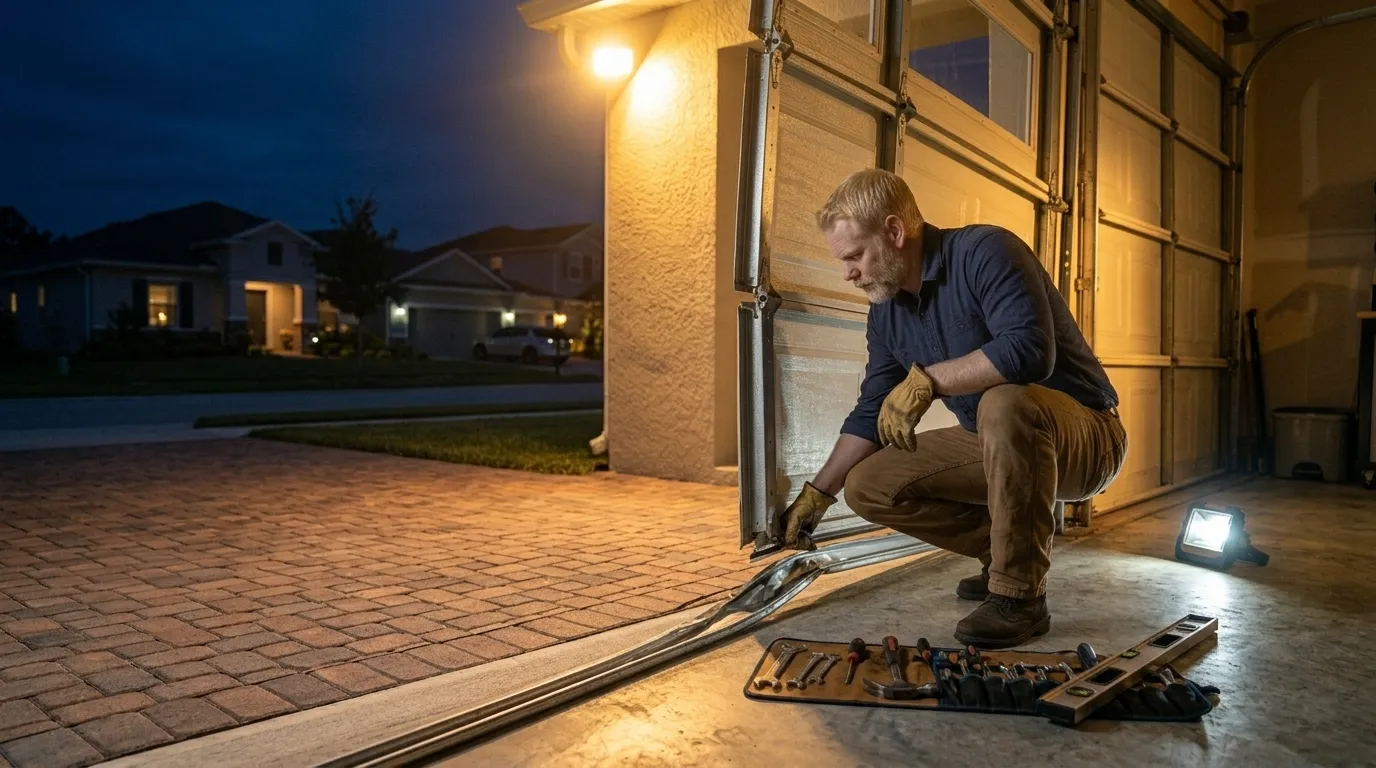
A straightforward lube-and-adjust visit on a door that's been kept running costs less than one where we're also diagnosing a spring that's lost tension or a track that's been bent and re-bent for sixty years. The honest answer is we price the visit after we've looked at the door, not before. If a part is worn past the point of adjustment, we'll tell you what it costs to replace it and let you decide - we're not going to talk anyone into a new door when the old one still has life in it.
Parts We Carry
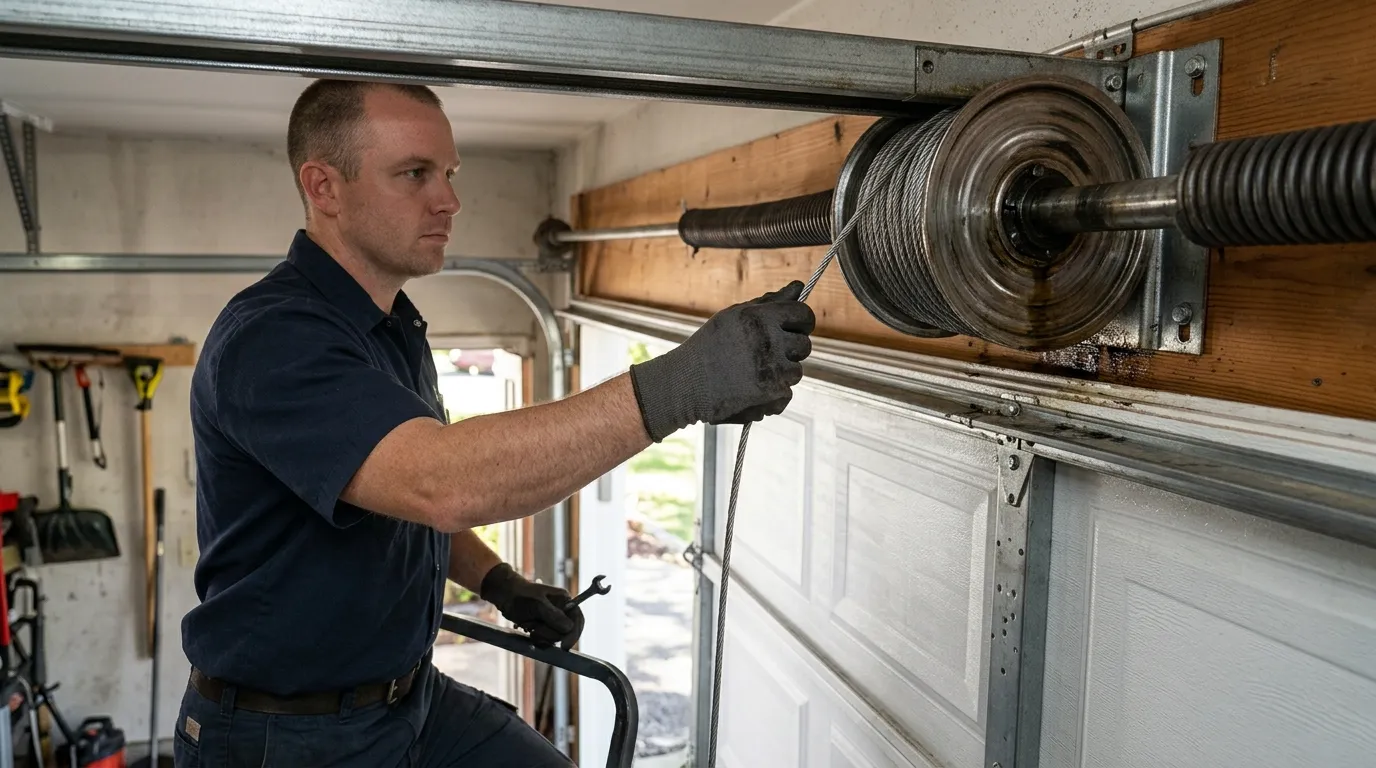
For a house built around 1938, the parts on the truck that matter most are the ones that fit older extension-spring setups and narrower track gauges - not the torsion drums and end bearing plates that cover most of the newer stock elsewhere in the service area. We carry standard rollers, cables, and hinges that cross over to older track widths, along with lubricant rated for the cold-climate swings this region gets through winter.
What we don't carry on the truck is anything custom-milled. If a door's original track or a specific hardware casting from that era is bent beyond straightening, that part sometimes has to be sourced rather than pulled off the shelf, and that can mean a short wait. We'd rather tell you that up front than promise a same-visit fix we can't back up.
Can You Do This Yourself
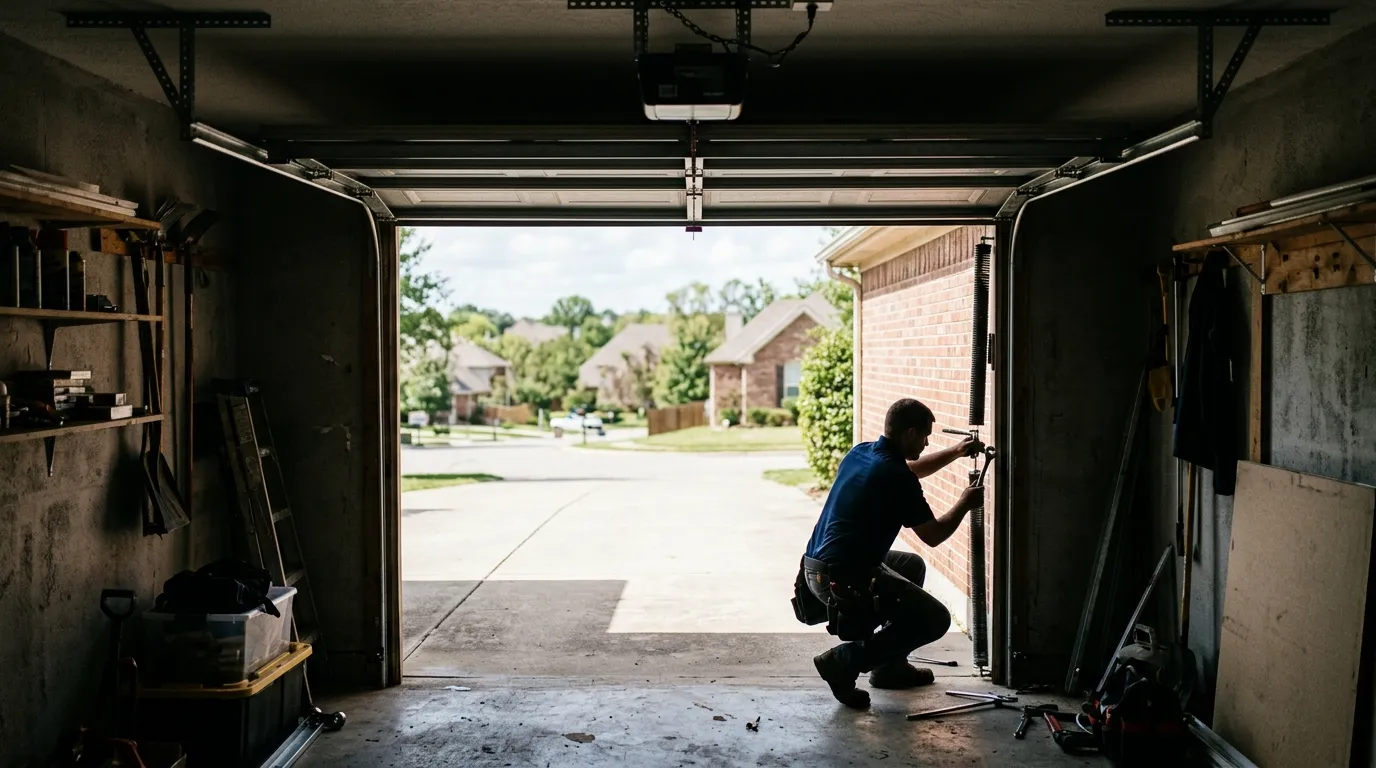
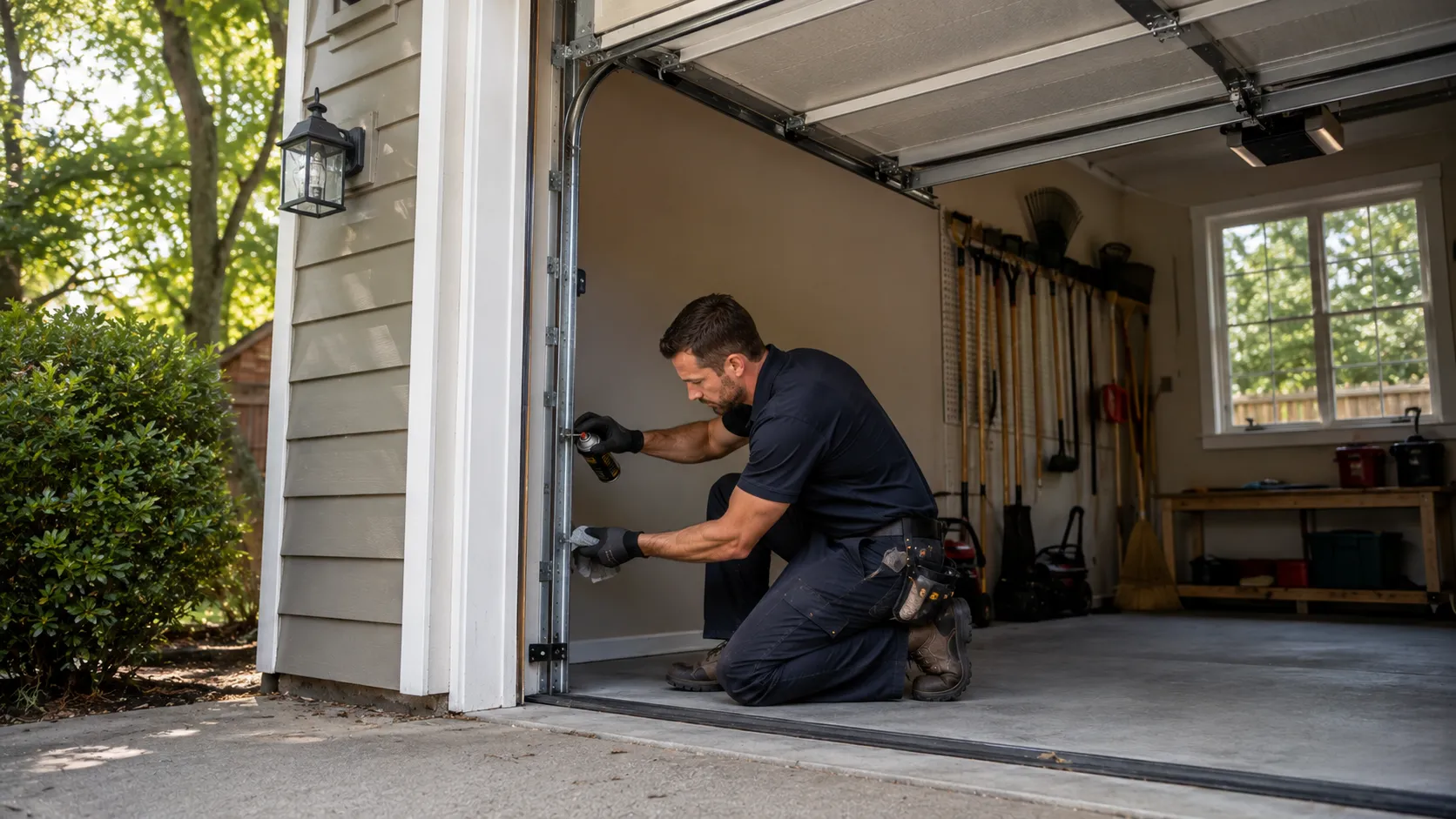
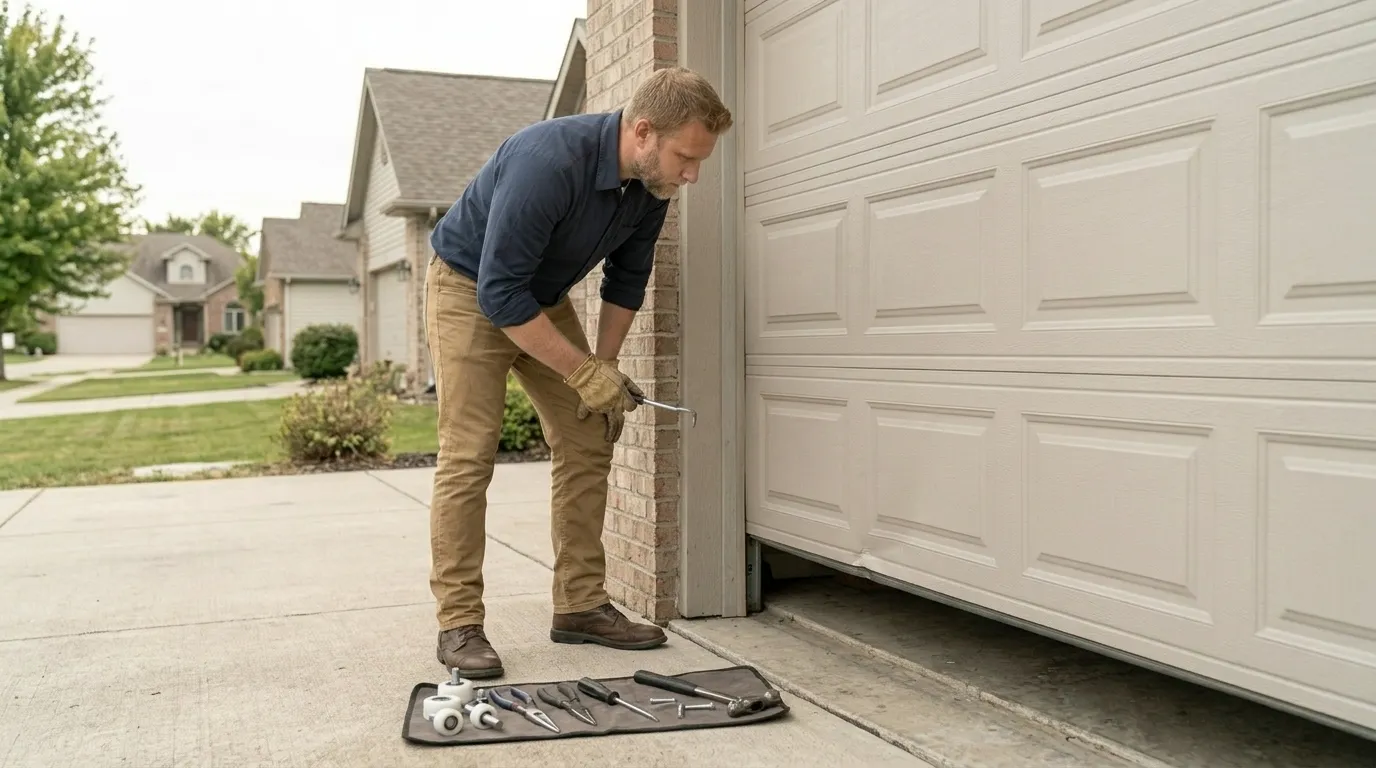
Lubricating hinges and rollers, wiping down tracks, and checking that the auto-reverse still trips on a scrap of wood under the door - all of that is fine to do yourself, on a door of any age. What we'd stop you on is anything involving the spring itself. On original 1938-era extension spring setups especially, the tension and the mounting hardware weren't built to today's safety standards, and there's no adjustment on that system that's worth doing without the right bars and experience.
If your door is sticking, dragging on one side, or making a new noise on the way down, that's worth a call rather than a guess. We travel out from Martinsburg to cover Shepherdstown, so we're not going to pretend we can be there in ten minutes - but a maintenance visit planned ahead of a failure is always cheaper than an emergency one after a spring lets go.