How Local Conditions Play In
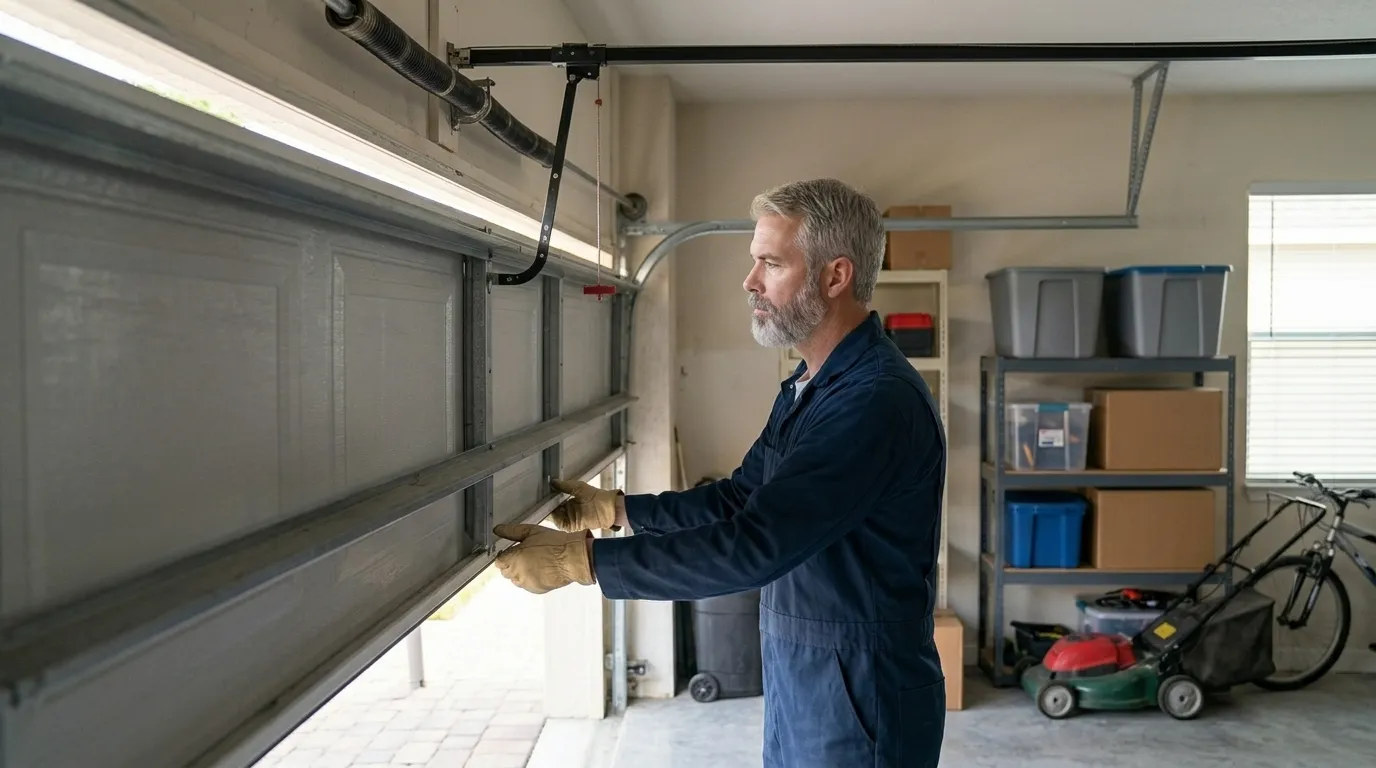
Martinsburg sits in a cold-severe climate band, and that changes what "worth fixing" means here compared with a mild-winter town. Steel doors from the older end of our housing range - the 1938 to roughly 1980s builds - were rarely insulated to a standard that holds up against real cold, and the seals and weatherstripping on those doors dry out and crack faster once winter sets in. A repair that just replaces a broken spring or a bent panel on one of these older doors patches the mechanical problem but leaves the insulation gap untouched, so the door keeps losing heat and keeps stressing the opener every cold morning. On the newer end of our housing stock, doors built closer to the 2001 median and after tend to have better factory insulation and tighter seals, so a straightforward repair holds up through the winter the way it should. Cold-severe conditions are hard on rollers and hinges too - metal contracts, hardware binds, and a marginal part that would coast through a mild winter elsewhere fails here in January.
Doing Nothing For Now
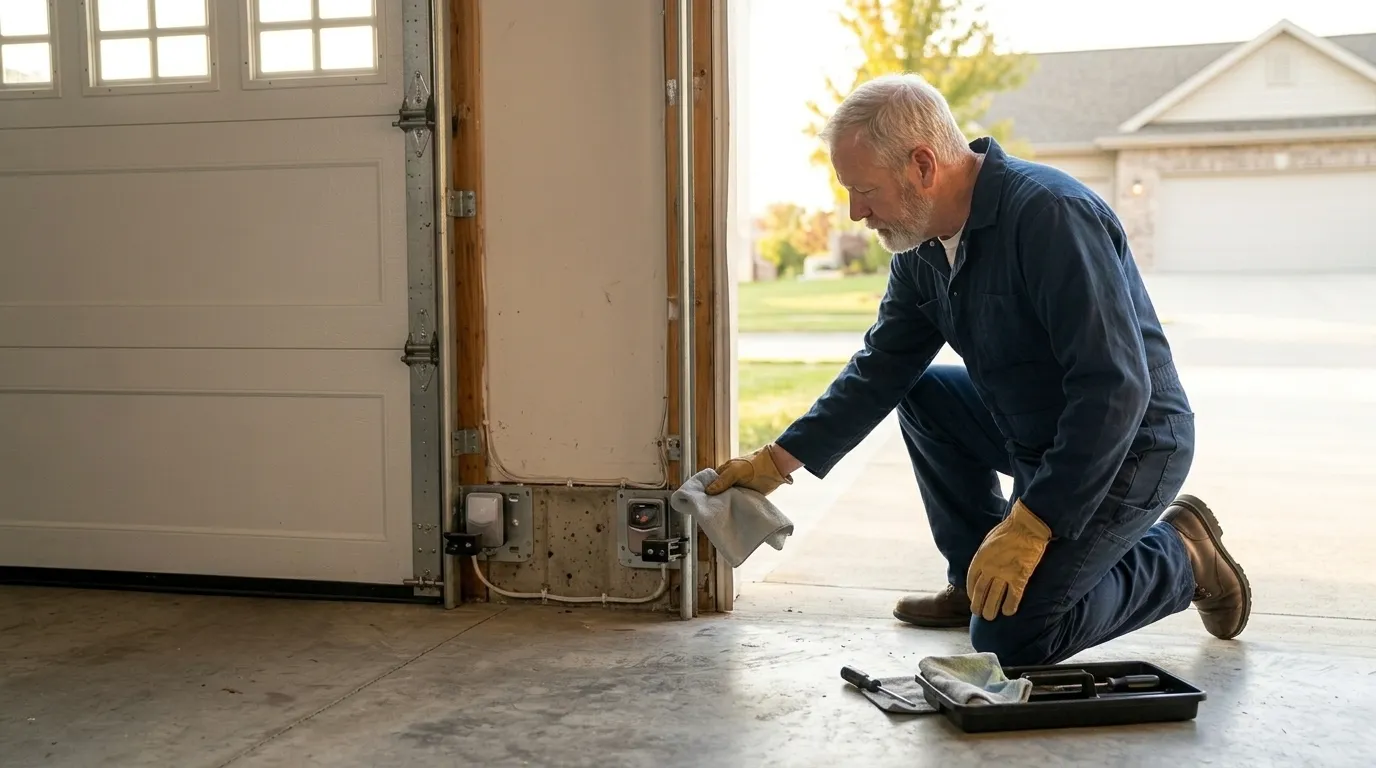
Sometimes the right call really is to do nothing yet. If your door is on the newer side of Martinsburg's housing stock, closer to that 2001 median build year, and the problem is a single worn part - a roller, a cable, a sensor out of alignment - fixing just that part is usually the smart move and there's no reason to talk yourself into a replacement. We'll say plainly when a repair is enough, because pushing a full replacement on a door that has years left in it isn't a job we want. The harder call is the door that's old, has had two or three past repairs, and is starting to show a second symptom on top of the first. That's the door where doing nothing costs you more the longer you wait, because a spring failure on aging hardware can take the opener or the track down with it. We don't have exact numbers on how often that happens here, so we won't pretend otherwise - but we do know Martinsburg's oldest doors are old enough now that this pattern shows up regularly on our calls.