What the Fix Involves
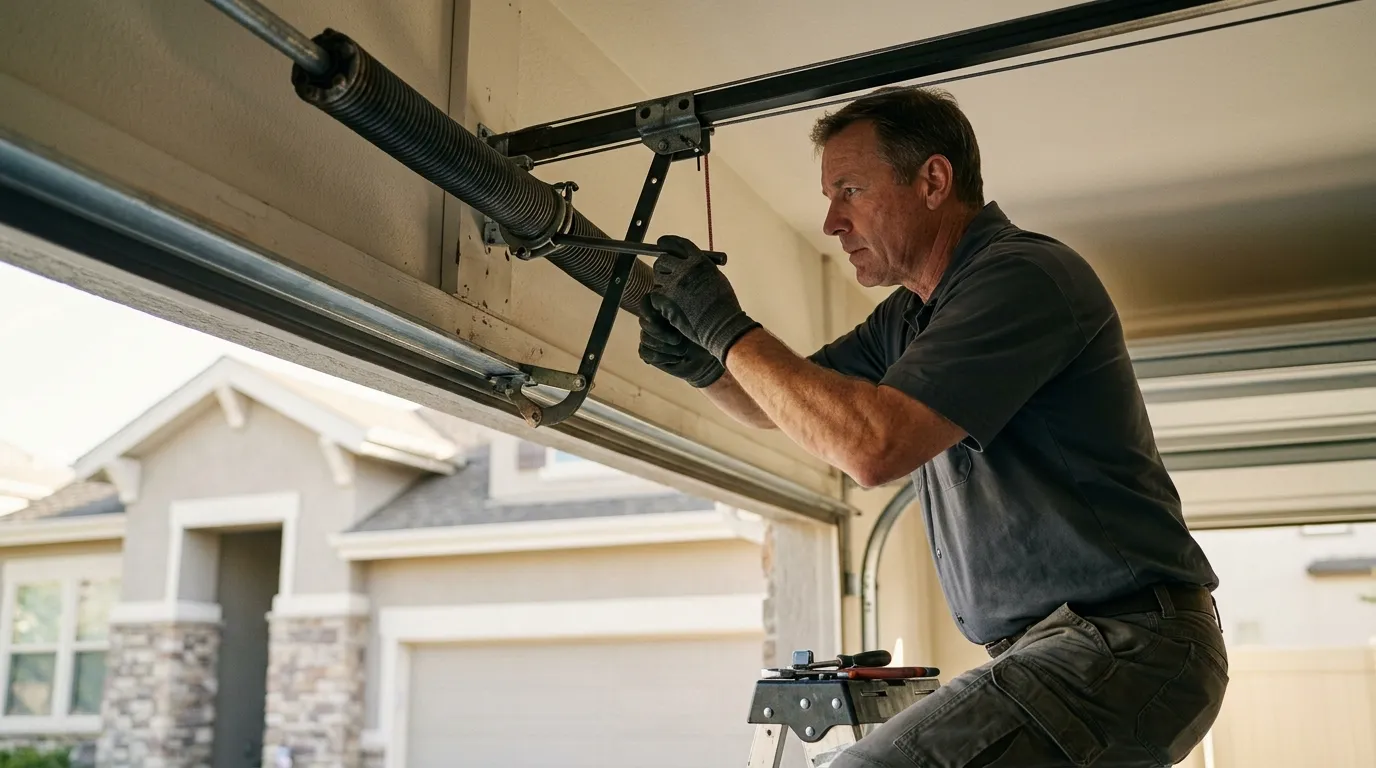
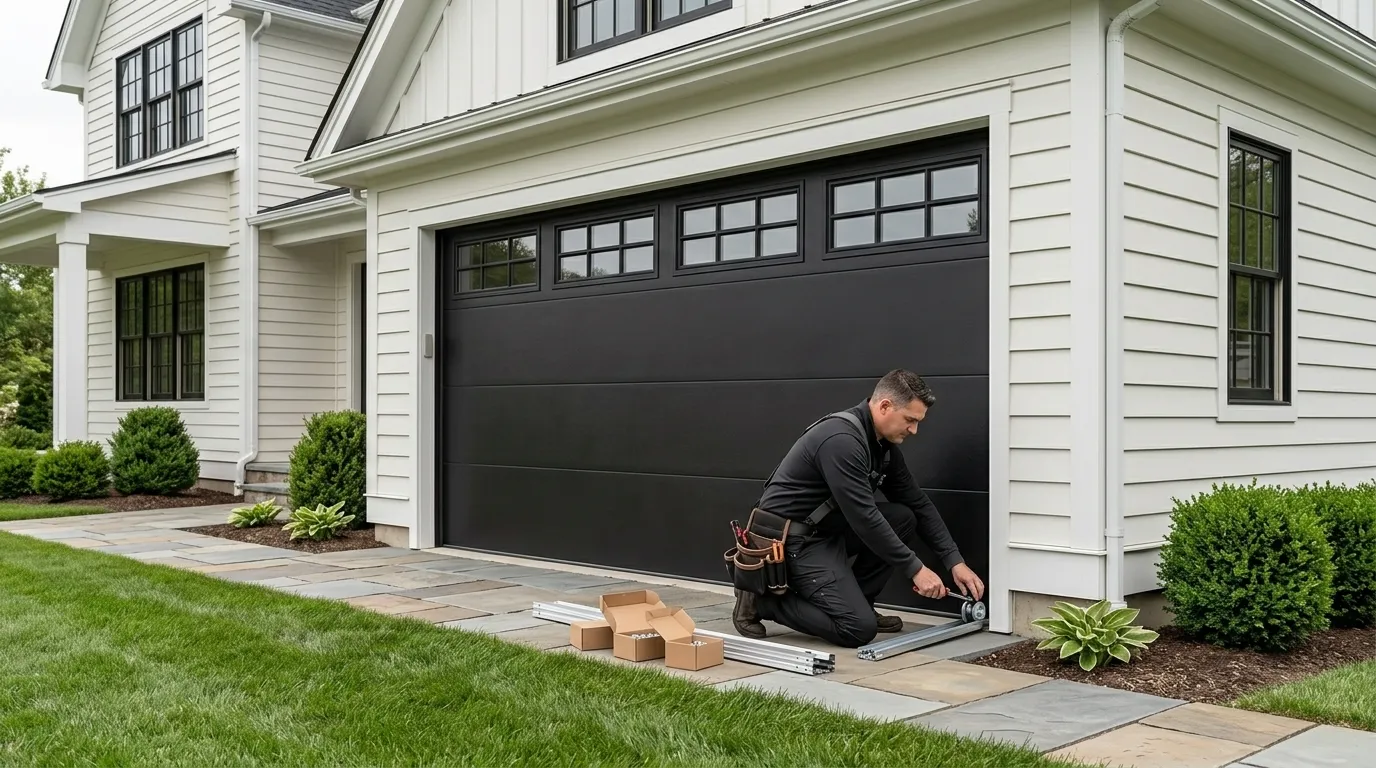
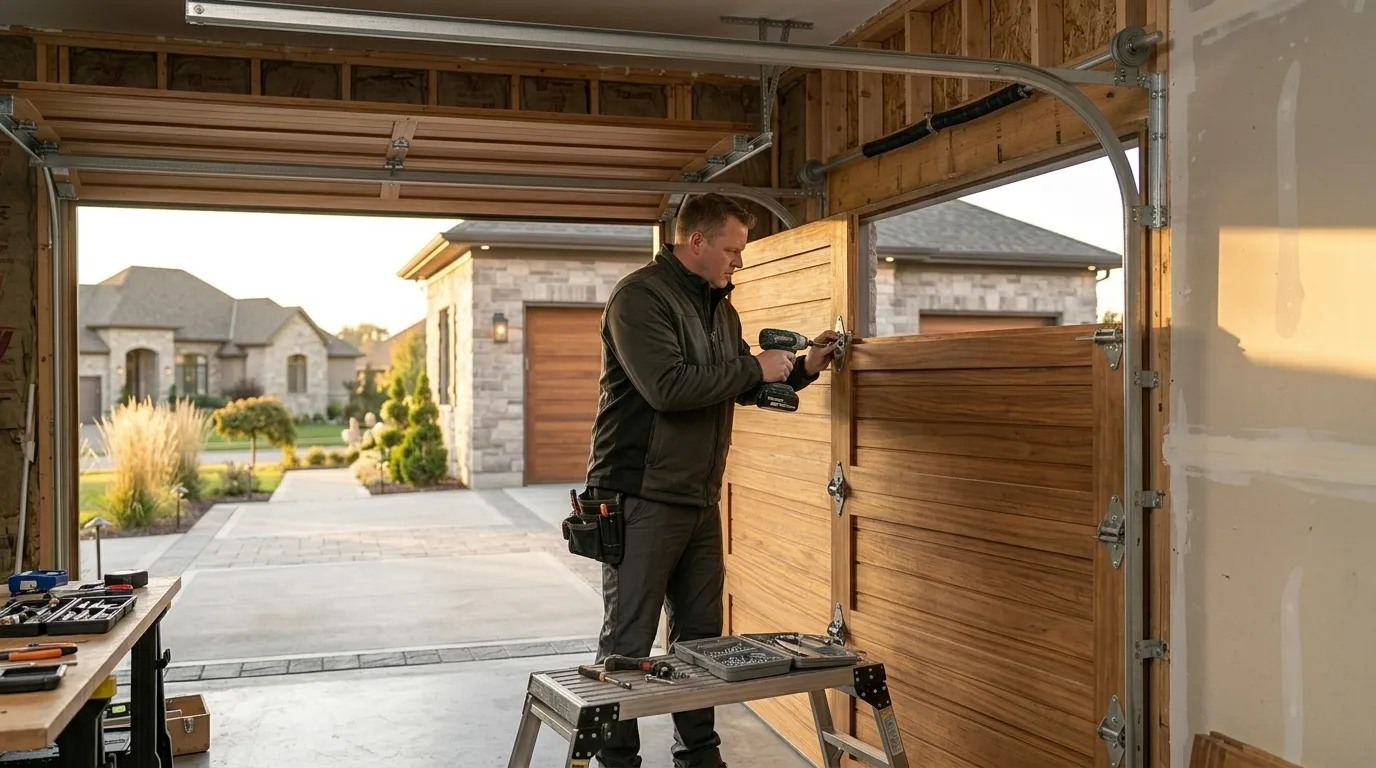
Most houses in Inwood went up around 2002, and that year matters more than it sounds like it should. A door built in 2002 almost always means a steel sectional door on torsion springs mounted above the opening, paired with a chain or belt-drive opener that has a circuit board, not a set of mechanical limit switches. That's a different repair than what you'd find on a door from the 1970s with side-mounted hardware and no electronic sensors at all.
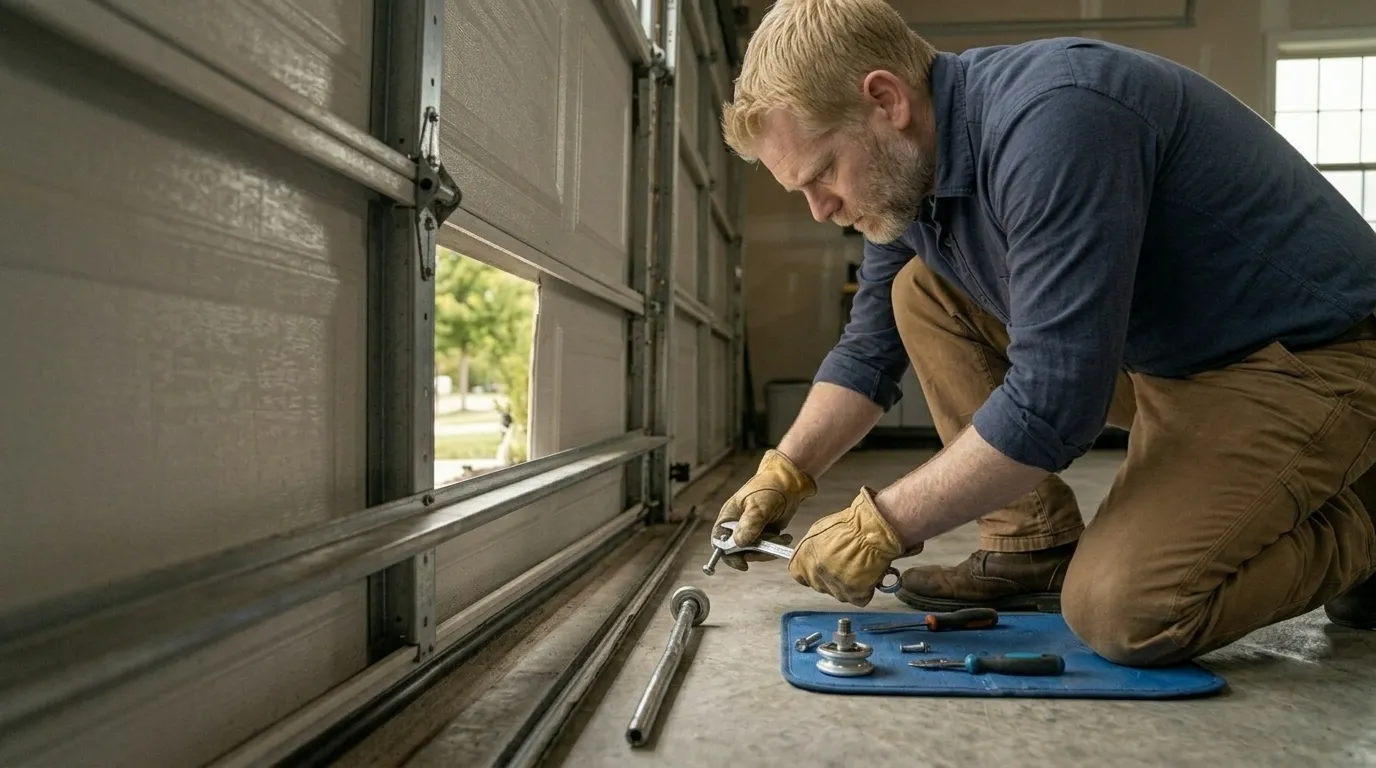
On a torsion setup, the fix usually means winding a new spring to the door's exact weight and drum size - guess wrong and the door either won't lift or slams down hard enough to bend a track. On the opener side, a lot of what reads as "the door won't open" on a 2000s-era unit is actually a dead safety sensor or a worn drive gear inside the housing, not the door itself.
We carry common torsion spring sizes and standard opener parts on the truck. What we don't stock is anything obscure or discontinued - if your opener is an older model no longer made, that part has to be sourced, and we'll tell you that up front rather than promise a fix we can't deliver same visit.
What You Are Seeing
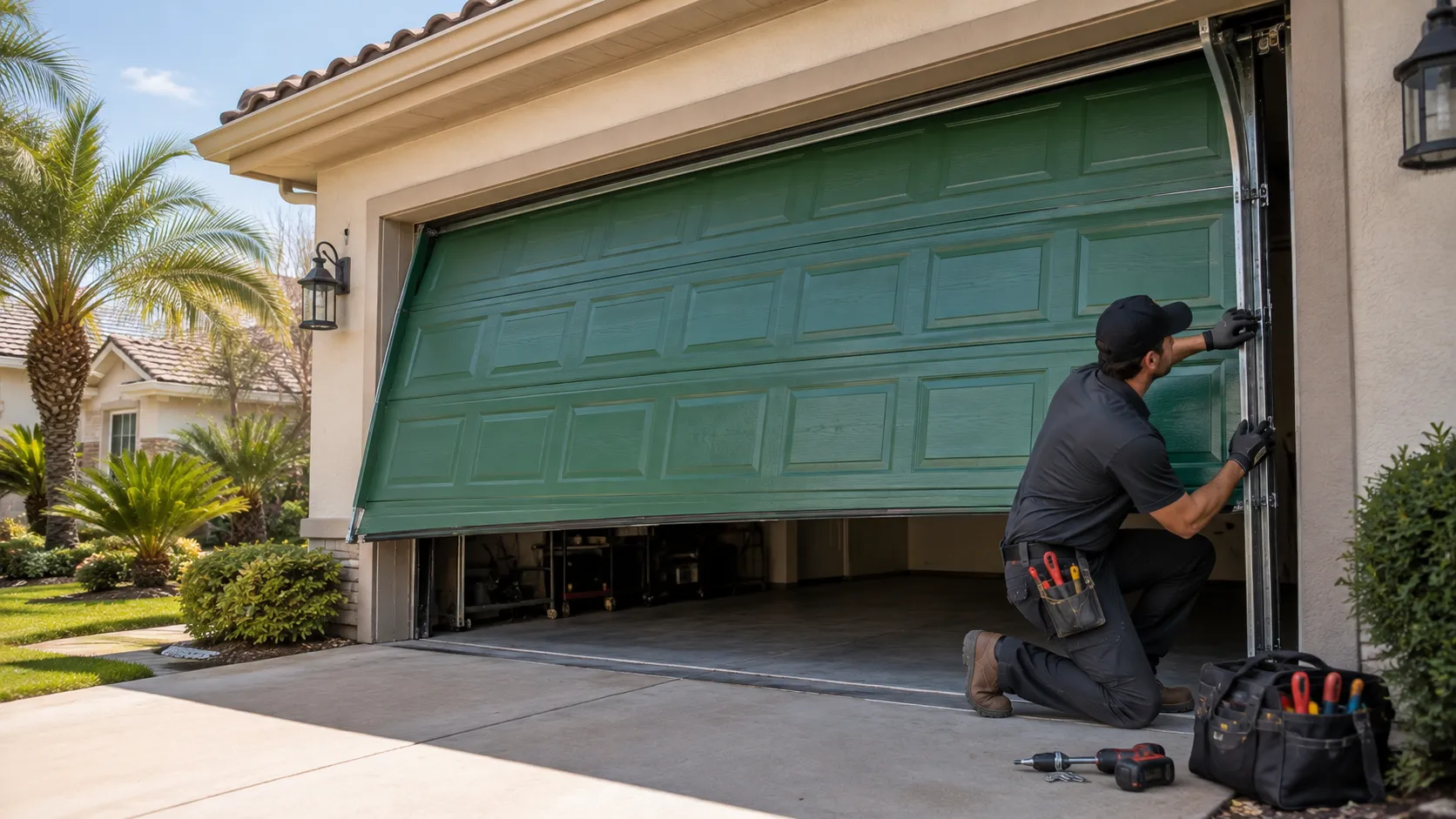
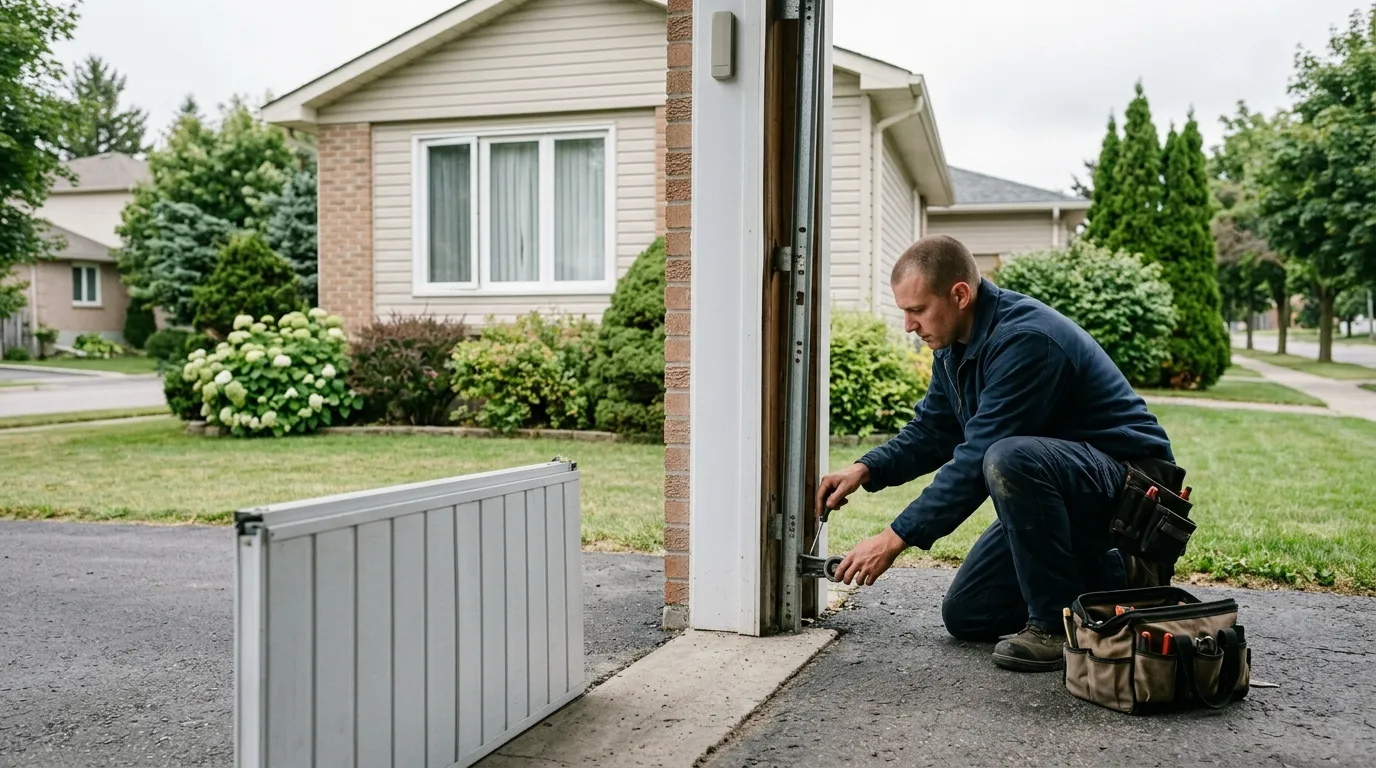
On a 2000s-built house, the signs that send someone calling are usually one of a few things: the door reverses on its own partway up, it opens but grinds or shudders on the track, or it simply won't respond to the opener at all while the wall switch does nothing either. A snapped torsion spring often shows up as the door refusing to lift more than a few inches, or a loud bang from the garage right before it happens.
Cables fraying at the bottom bracket is another one - you'll see a stray wire poking out near the roller, and that door needs to stay parked until it's looked at, because a cable that lets go under tension can whip the section it's attached to.
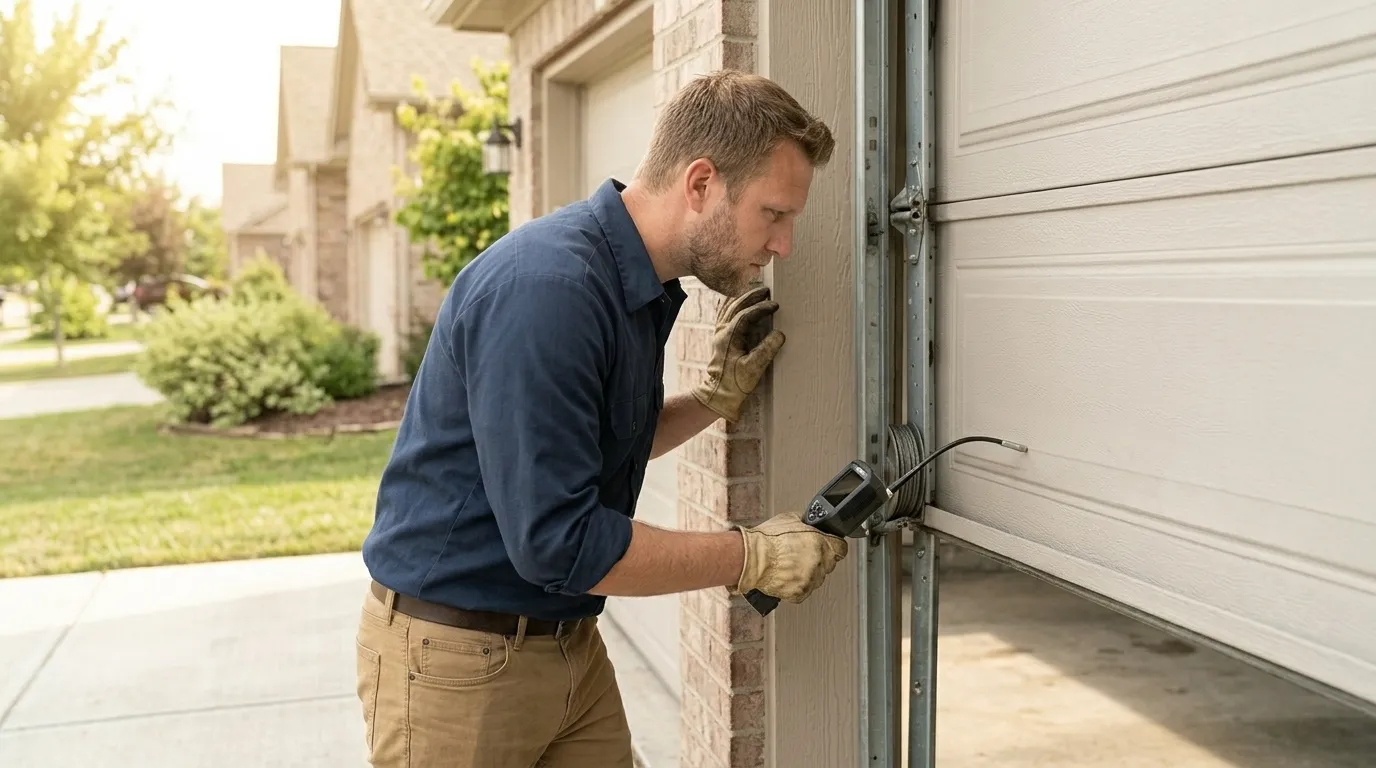
On the opener side, a blinking light on the unit with no door movement usually points to a sensor that's out of alignment or dirty, which is a five-minute check, not a parts replacement. We'll always check the cheap fix before we quote the expensive one.
The Cost of This Job
We don't have a set number to quote here without seeing the door, and giving one anyway would be a guess dressed up as a fact. What we can tell you is what drives the price on this kind of call: spring size and whether it's a single or double door, whether the opener needs a sensor or a full board, and whether the track or cable took damage along with the spring.
Households in this part of the service area report a median income in the $80,000s, which tends to track with the kind of steel sectional doors and mid-range openers that came standard on houses built through the early 2000s - not custom wood doors, not bargain-bin hardware either. That matters because parts availability for that middle tier is generally good, which keeps a repair from turning into a full replacement more often than not.
We'll give you a real number after we've looked at the door and the opener, not before. Anything else is a placeholder, and placeholders don't fix garage doors.
Why This Fails Locally
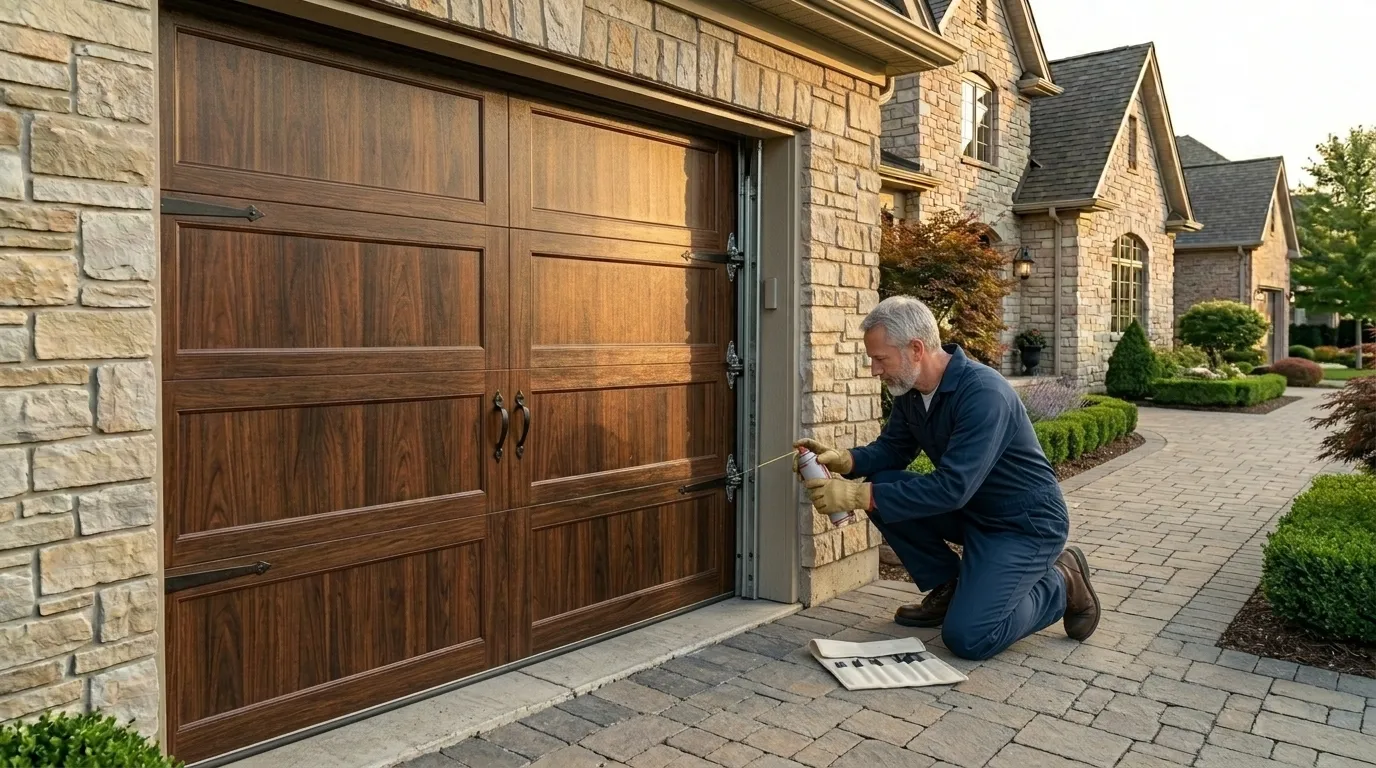
This area sits in a cold-climate zone with winters that stress garage door hardware in specific ways - springs lose tension faster in the cold, and steel tracks contract just enough to throw off alignment that was fine in September. On a door built in the early 2000s, that shows up as an opener that suddenly struggles to lift a door it handled fine all summer, because the spring is doing less work than it was calibrated for.
With roughly a thousand households in Inwood, most sitting on housing stock from right around 2002, the hardware across this stretch is fairly uniform - similar spring weights, similar opener generations, similar failure points. That's useful, because it means we're not guessing at what's behind the panel before we get there.
The failure that catches people off guard is timing: a spring that was already fatigued by ten-plus years of cold cycling finally lets go on the first hard freeze, not gradually. That's not a defect specific to any one door - it's what happens to torsion springs in a severe cold climate once they've done a couple decades of work.