What the Fix Involves
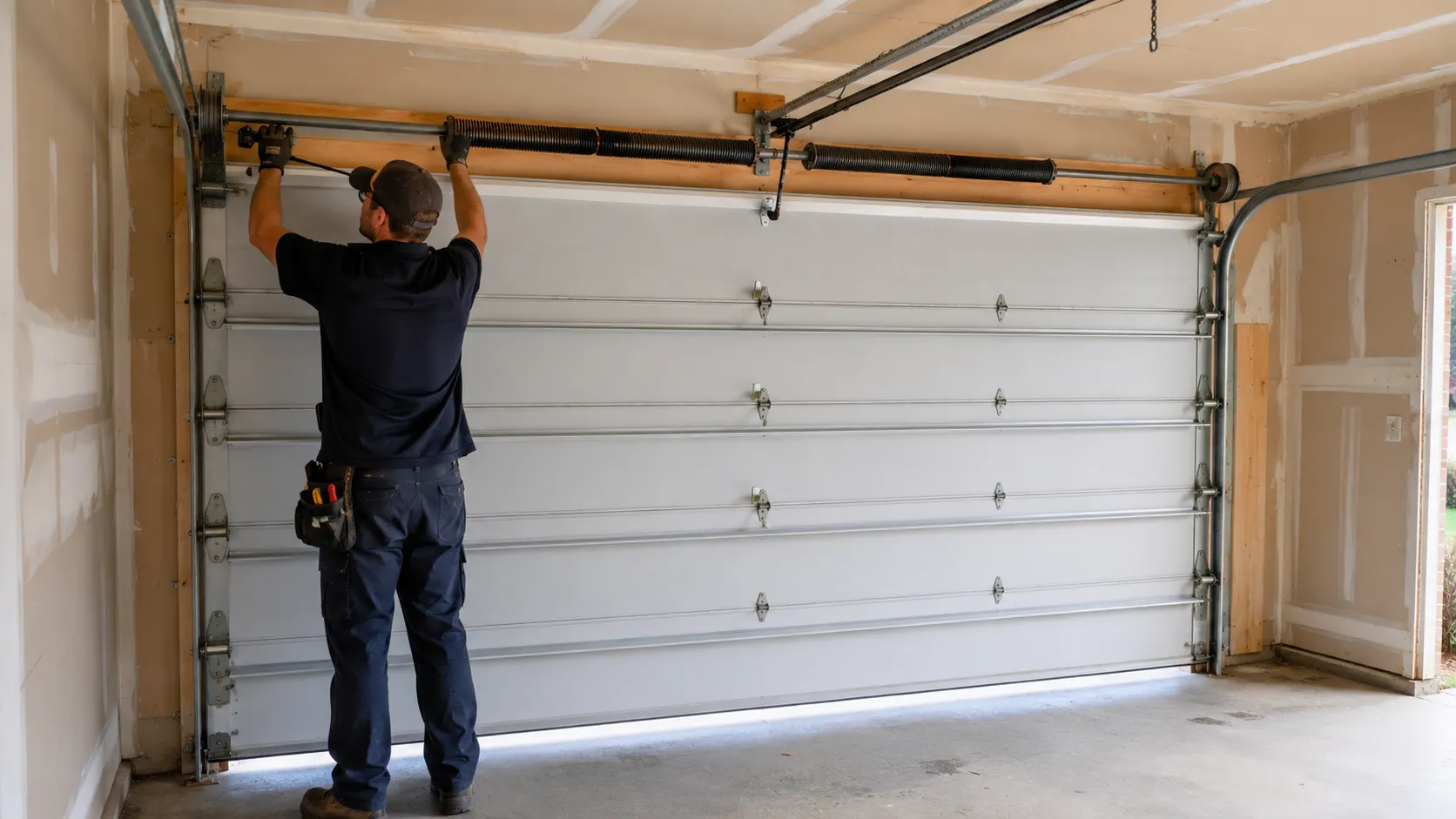
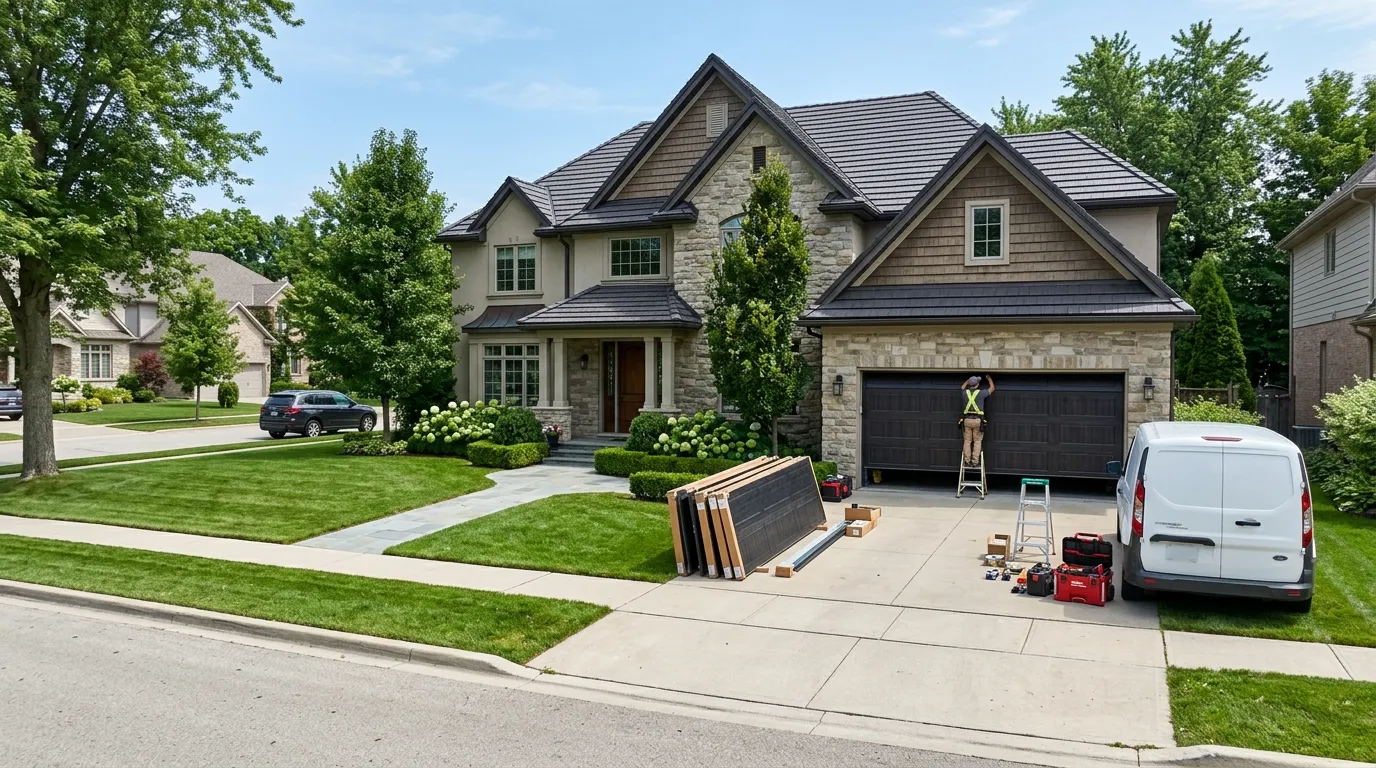
Most houses on this side of Inwood went up around 2002, and that one number decides most of the job. A torsion spring rated for a 20-25 year cycle life on a door installed in 2002 is now past its expected working life, and a lot of the openers from that same construction wave are original - meaning original circuit boards, original photo-eye wiring, original gear sets.
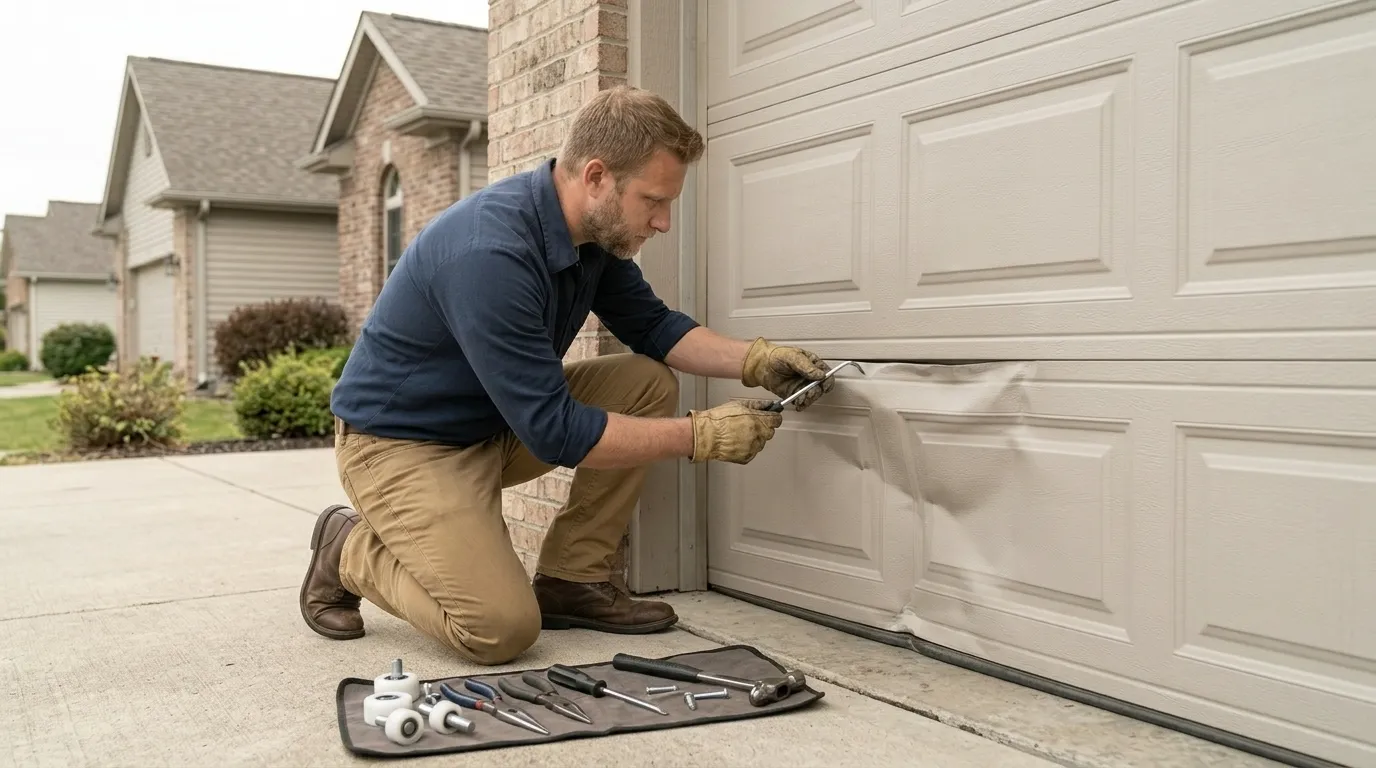
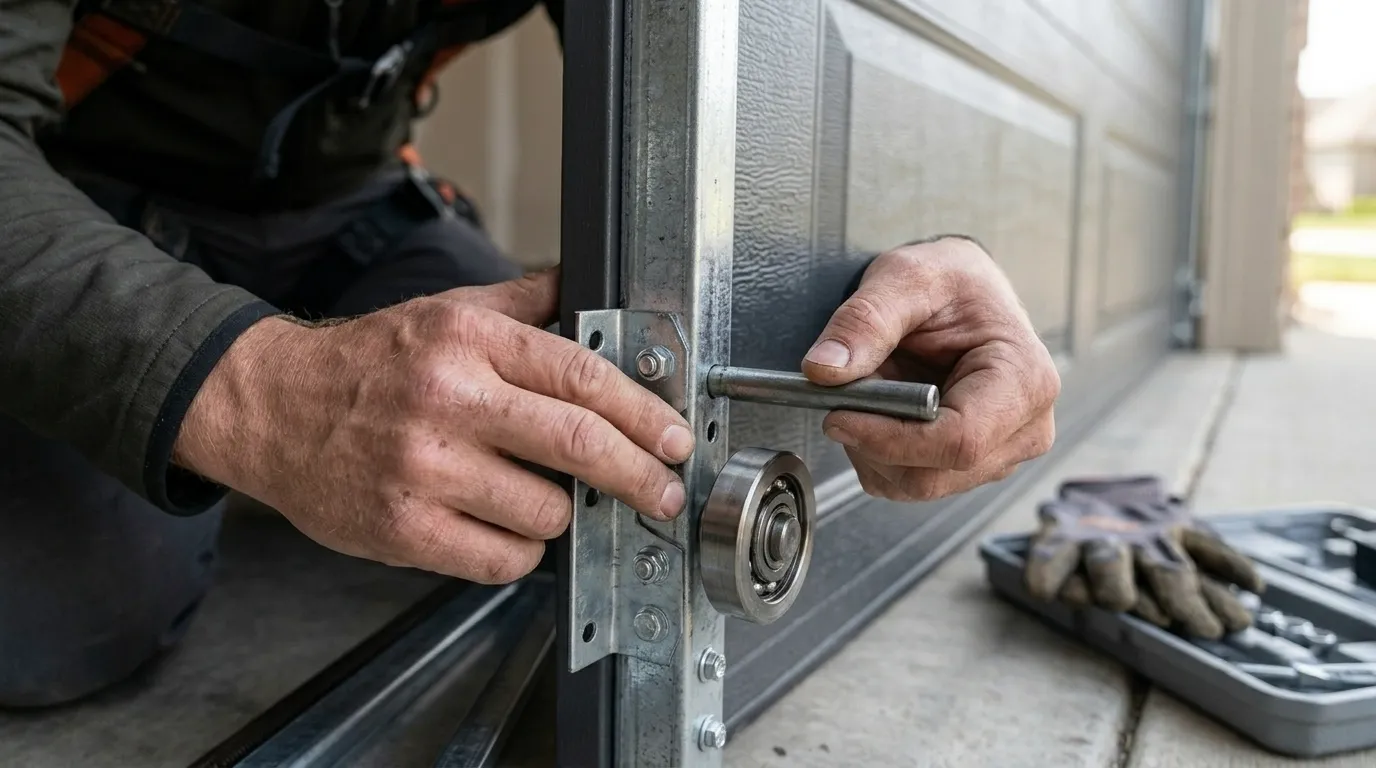
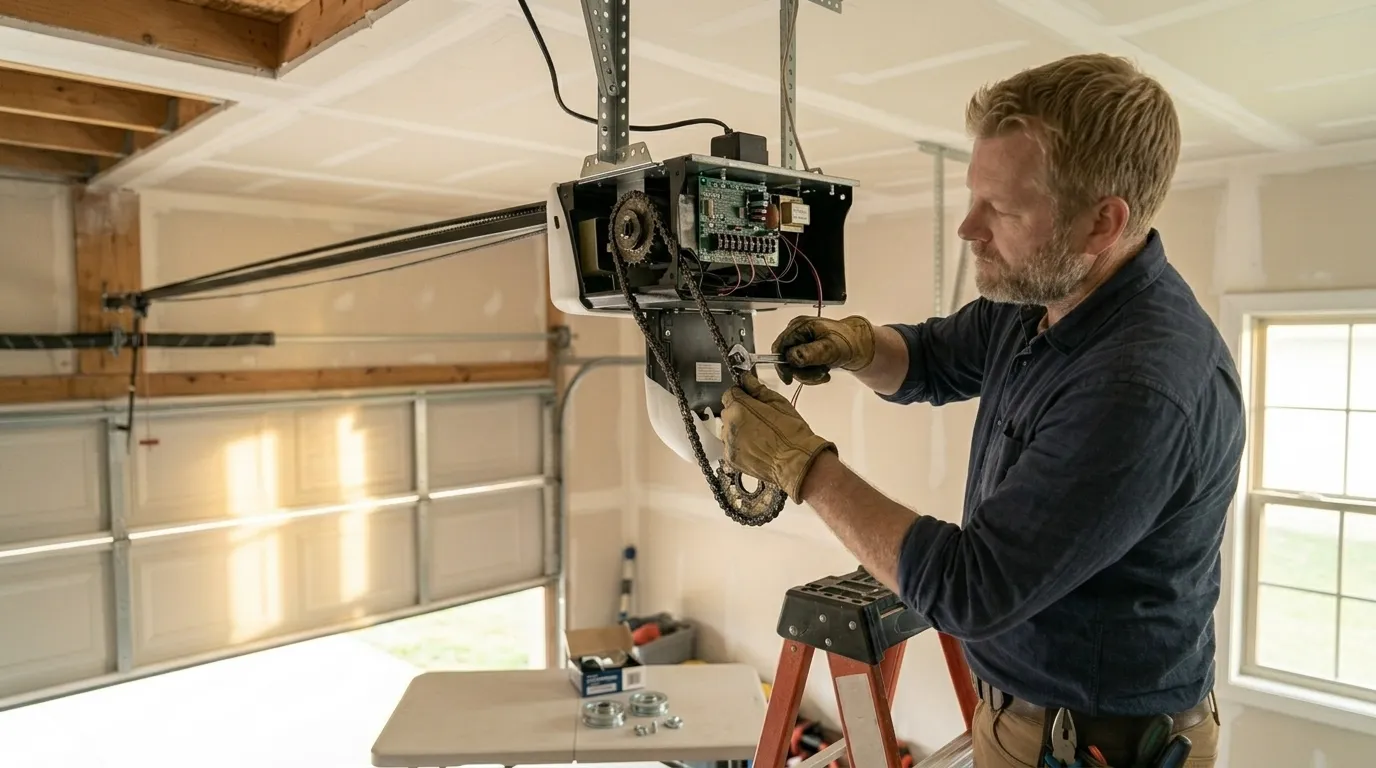
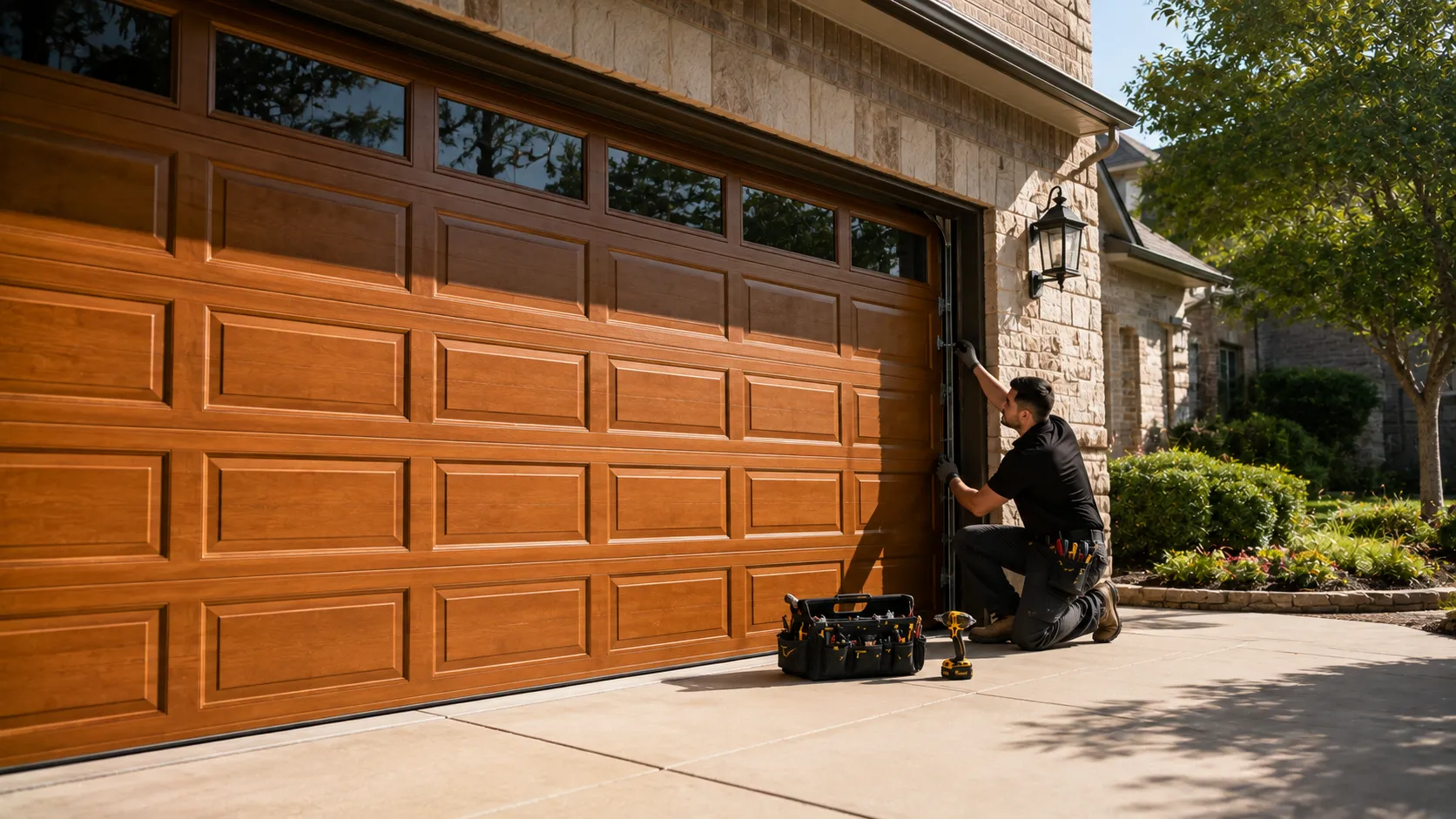
So the fix usually breaks down one of two ways. Either it's mechanical - a torsion spring, a cable, or a roller worn out from two decades of daily cycles - or it's electrical, where the opener's logic board or capacitor has finally quit after running the same unit since the house was built. We check both before we quote anything, because replacing a spring on a door whose opener board is also on its way out just means a second call next winter.
What You Are Seeing
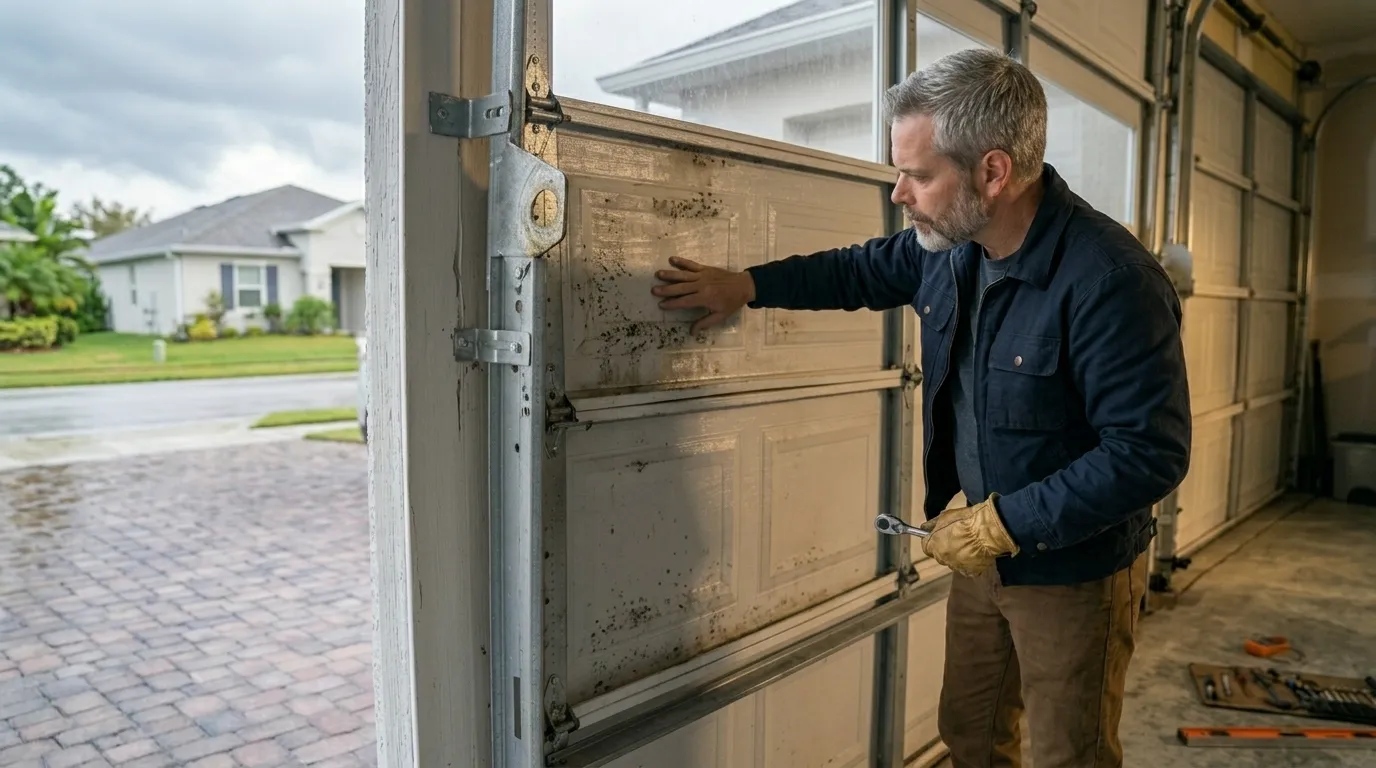
The door hesitates, then reverses partway up. Or it opens fine but closes crooked, dragging on one track because a cable stretched unevenly. Sometimes the opener light blinks a code and does nothing else - that's usually the board, not the door itself.
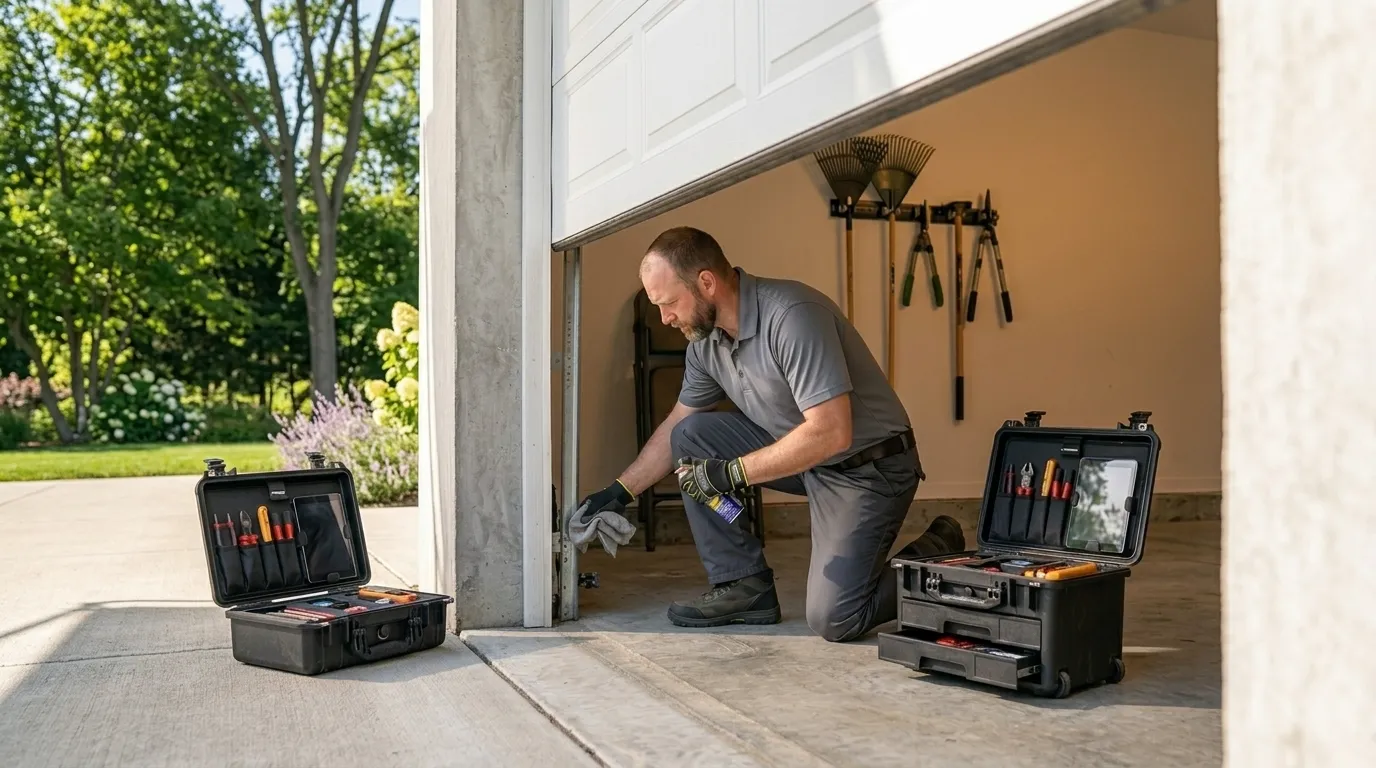
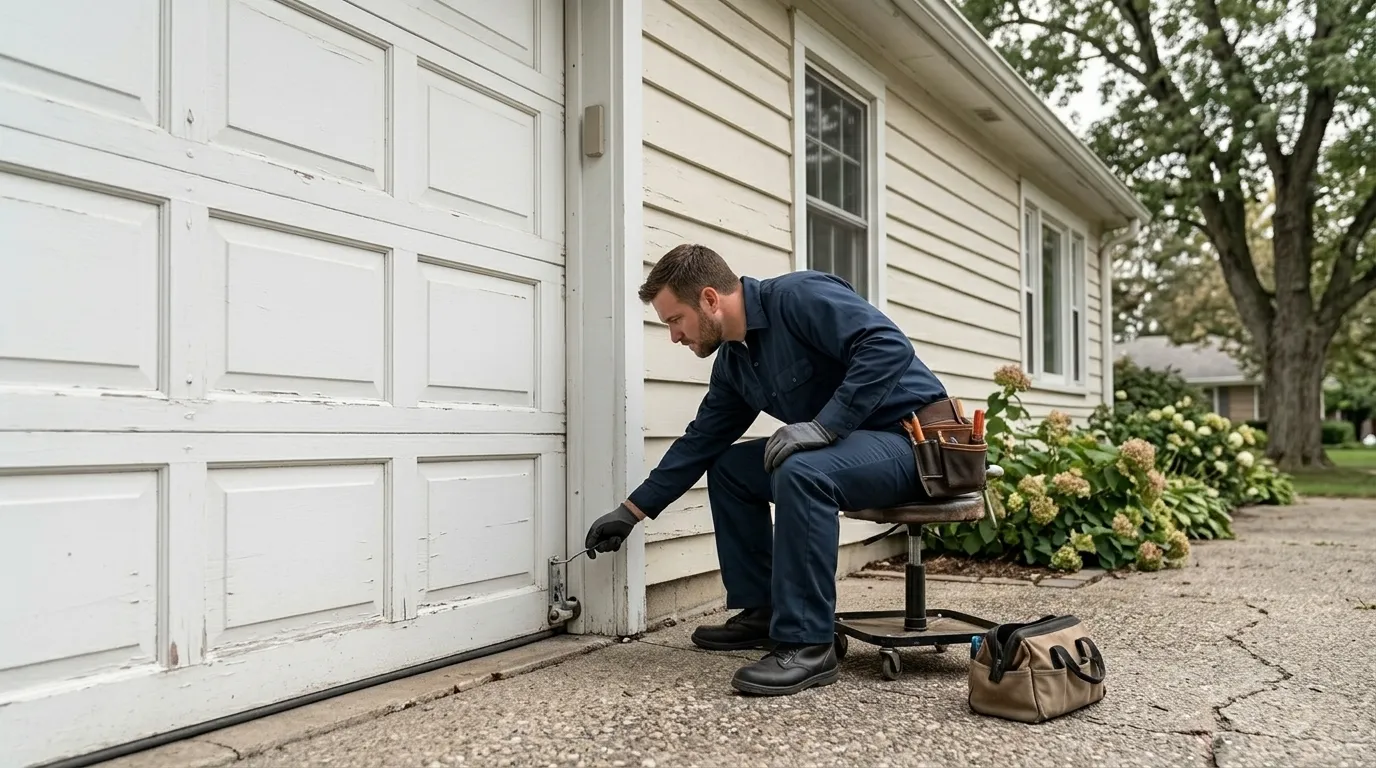
On houses built close to 2002, we also see a specific pattern: the photo-eye sensors near the bottom of the track have loosened or corroded slightly over the years, so the door refuses to close even though nothing is actually blocking it. It's a five-minute fix once you know to look there, but it gets misdiagnosed as a spring problem more often than it should.
The Cost of This Job
We're not going to put a number here that isn't grounded - pricing depends on whether it's a spring, a cable, or a board, and on whether the part is something we stock or something we order. What we can say is that Inwood households, with a median income around $82,267, more often ask us to replace a failing opener outright rather than patch a 20-year-old board piece by piece, since a full swap tends to make more sense once the unit is that old.
What we won't do is sell you a new spring set on a door whose opener is also failing, then have you call back in a month for the second half of the job. If both are near the end, we say so up front, even if it means a bigger number than you were expecting.
Why This Fails Locally
This area sits in a severe cold climate band, and cold is hard on exactly the parts that are already aging out on a 2002-built door. Torsion springs lose flexibility as temperatures drop, so a spring that was already near the end of its cycle life snaps on the first real cold snap rather than wearing out gradually. Old grease inside twenty-year-old opener gearboxes thickens the same way, which is why a chunk of our Inwood calls land in the week after the first hard freeze rather than spread evenly through the year.
It isn't bad luck. It's a house built in the early 2000s reaching the point where its original hardware and a cold winter arrive at the same time. That combination is specific to housing stock this age - a neighborhood built ten years earlier or later wouldn't be failing on the same schedule.