
What the Fix Involves
If your house here dates to somewhere around 2002 - and most in Inwood do - there's a real chance nobody has touched the torsion spring or the opener since the builder installed them. Torsion springs are rated in cycles, not years, and a spring that's been opening and closing for over two decades on the original wind is past due no matter how quiet it still sounds.
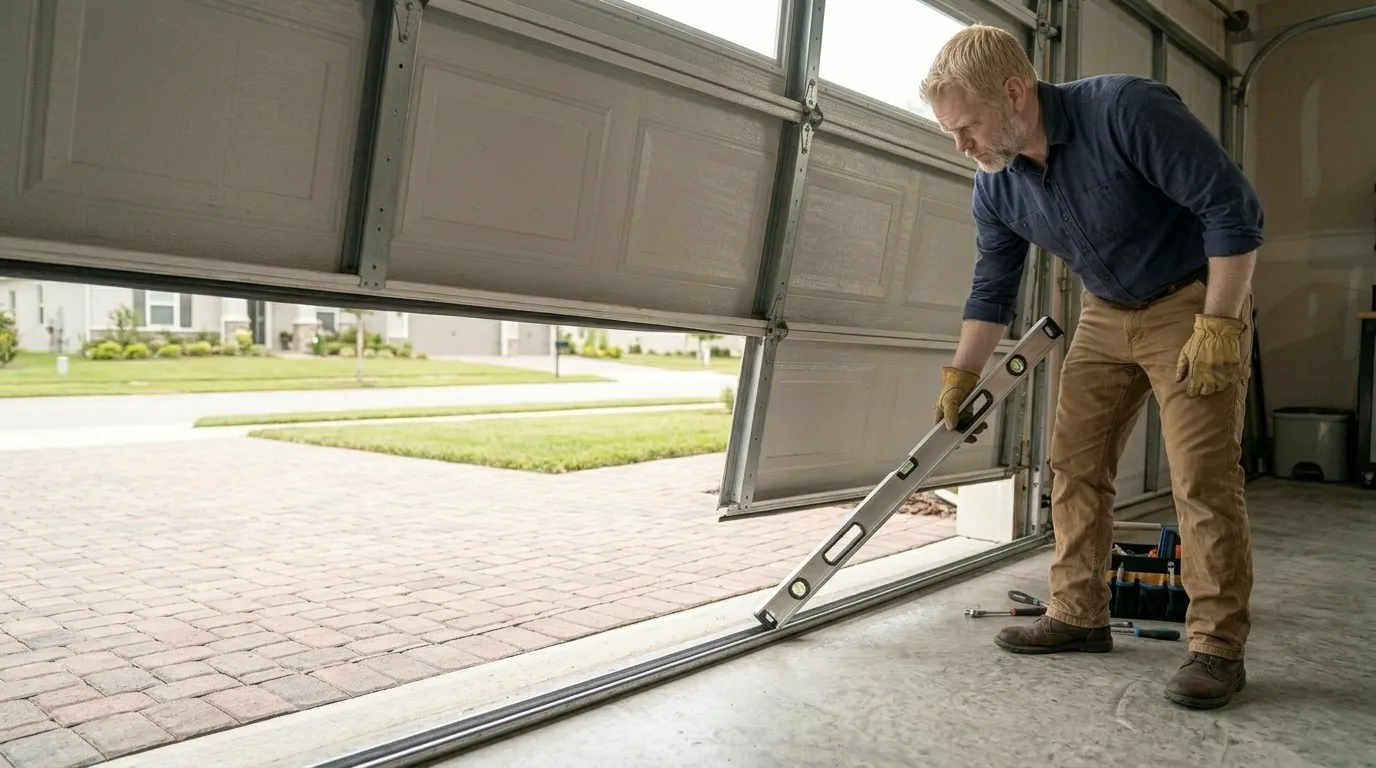
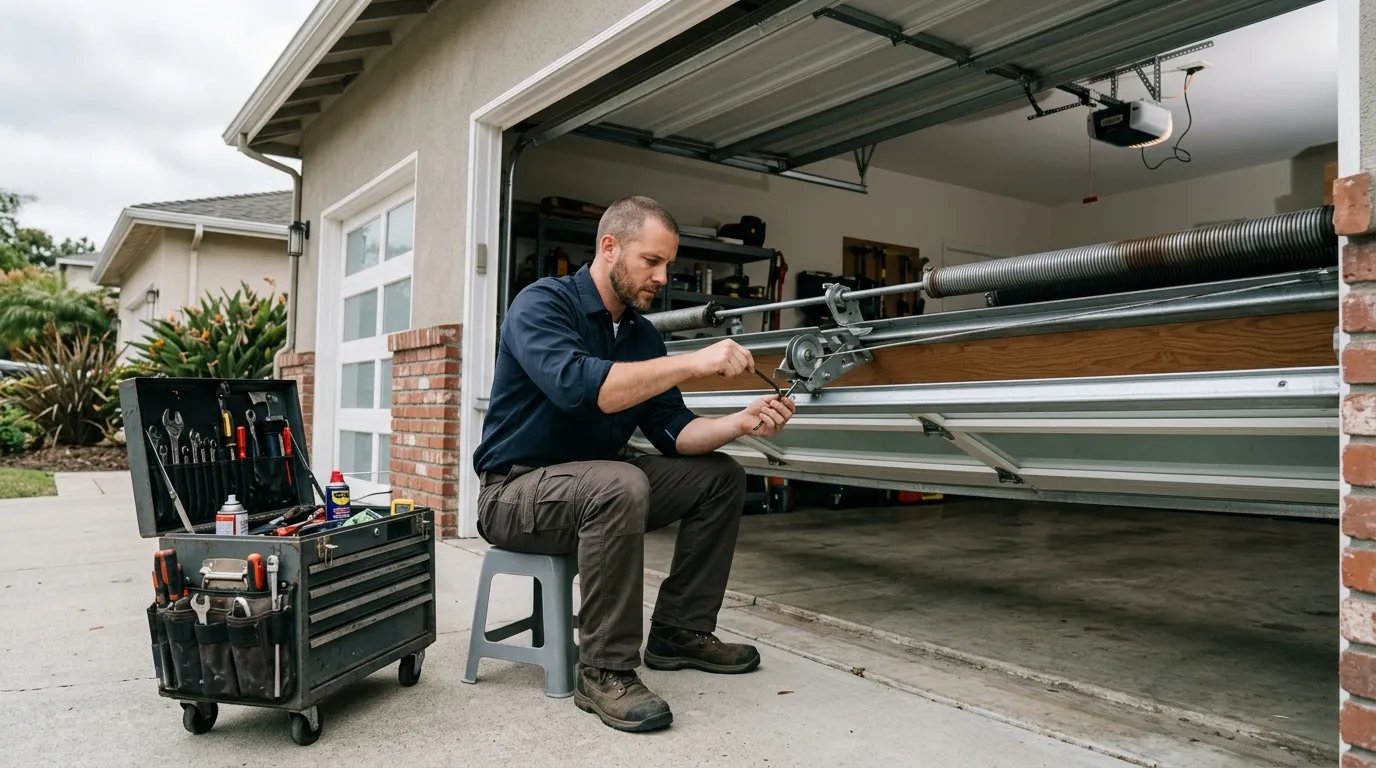
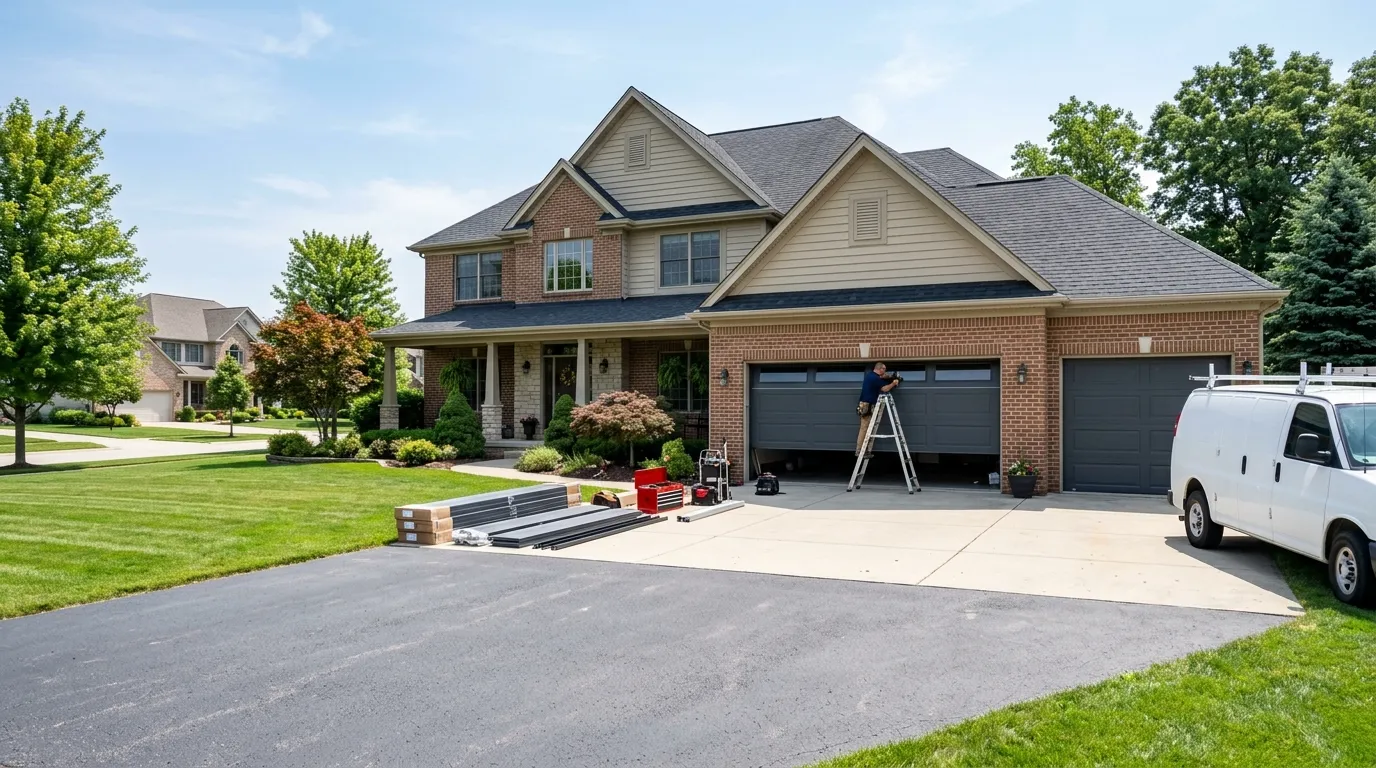
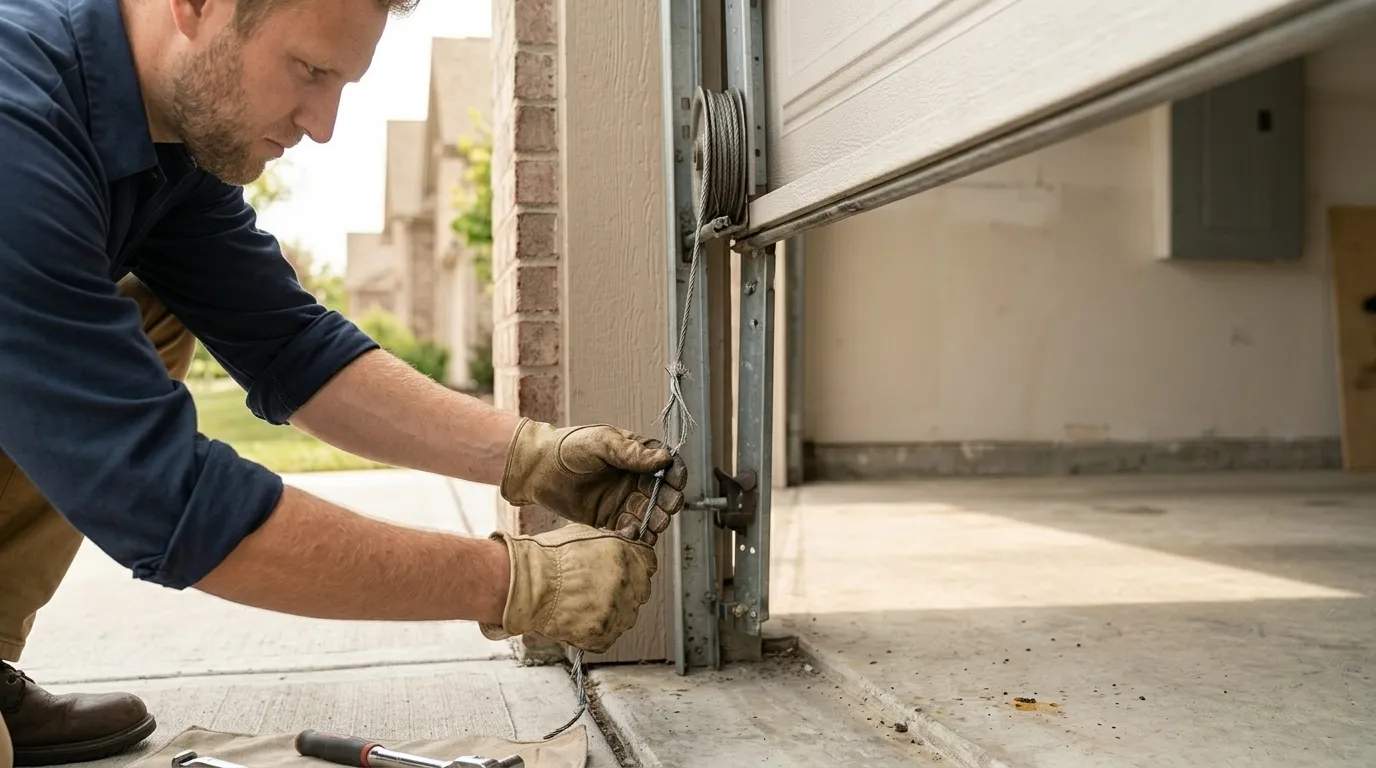
The fix is straightforward on paper: pull the old spring, match the wire gauge and wind to the door weight, and replace worn rollers and hinges while the door is already off track. What complicates it is when the opener is the same age as the spring - a chain-drive unit from that build era often uses a logic board or gear set that's no longer stocked, and replacing the opener outright ends up cheaper and faster than chasing parts for it.
What You Are Seeing
The door groans or shudders partway through its travel, especially in the morning before anything's warmed up. The opener strains, and you can hear the motor working harder than it used to for the same door. Sometimes the door reverses on its own halfway down, which usually means the spring has lost enough tension that the opener's force sensor thinks it's hit an obstruction.
On a 2002-built house, this is rarely a wiring problem or a track alignment problem. It's a spring at the end of its cycle life doing exactly what a worn spring does - and an opener working overtime to compensate for it. If you're only now noticing the strain, the spring has likely been degrading for a while before it became audible.
The Cost of This Job
We don't post prices here because the range depends on whether you're replacing a spring alone or a spring plus an aging opener, and that split shows up a lot in a neighborhood built in one tight window like Inwood's. A house where the original hardware was never touched tends to need more than a house where a previous owner already swapped the opener once.
What we can tell you is what drives the number: spring wire gauge and door weight, whether the drum and cable need replacing alongside the spring, and whether the opener is salvageable or needs replacing outright. We'll give you the actual figure after we've seen the door, not before.
Why This Fails Locally
This part of the state sits in a cold-severe climate band, and steel behaves differently at 15 degrees than it does at 70. A torsion spring near the end of its cycle life is already carrying less reserve strength than it did new - a hard freeze is often what finally breaks it, not a random Tuesday in June. That's why spring failures here tend to cluster in the coldest stretch of winter.
Stack that against Inwood's housing: with median household income here around $82,267, most owners are keeping these houses rather than flipping them, which means the original 2002 hardware is still in place on the majority of doors on the street, aging out together. When one spring goes in a cold snap, it's rarely the only one close to going.