What the Fix Involves
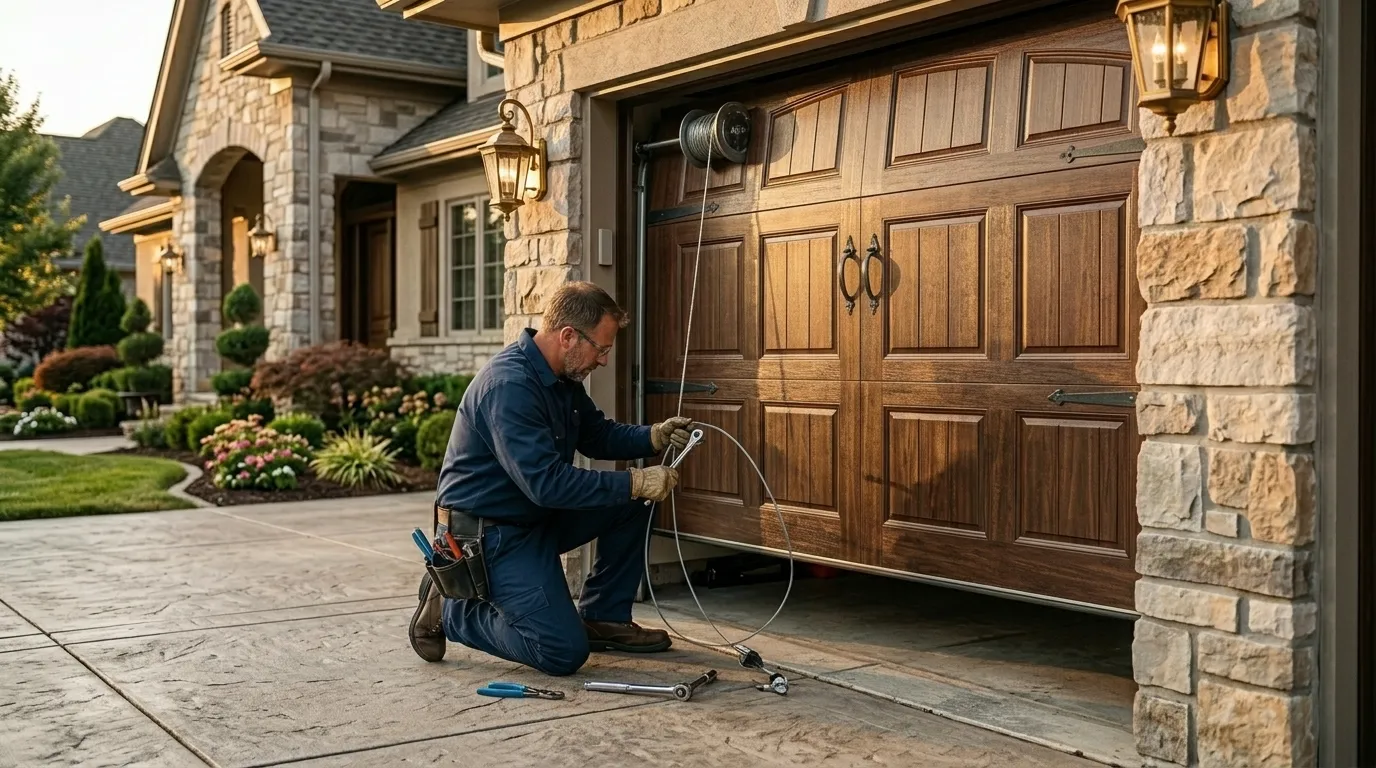
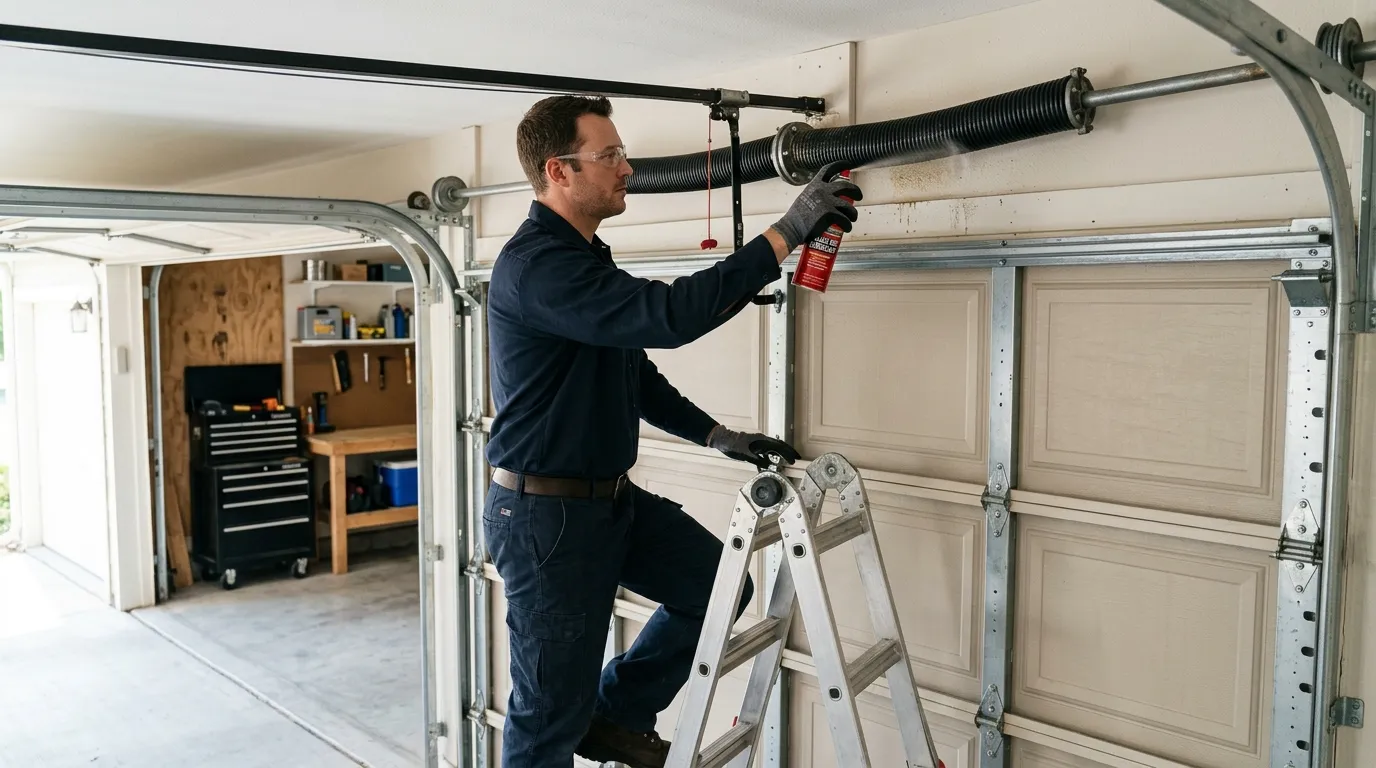
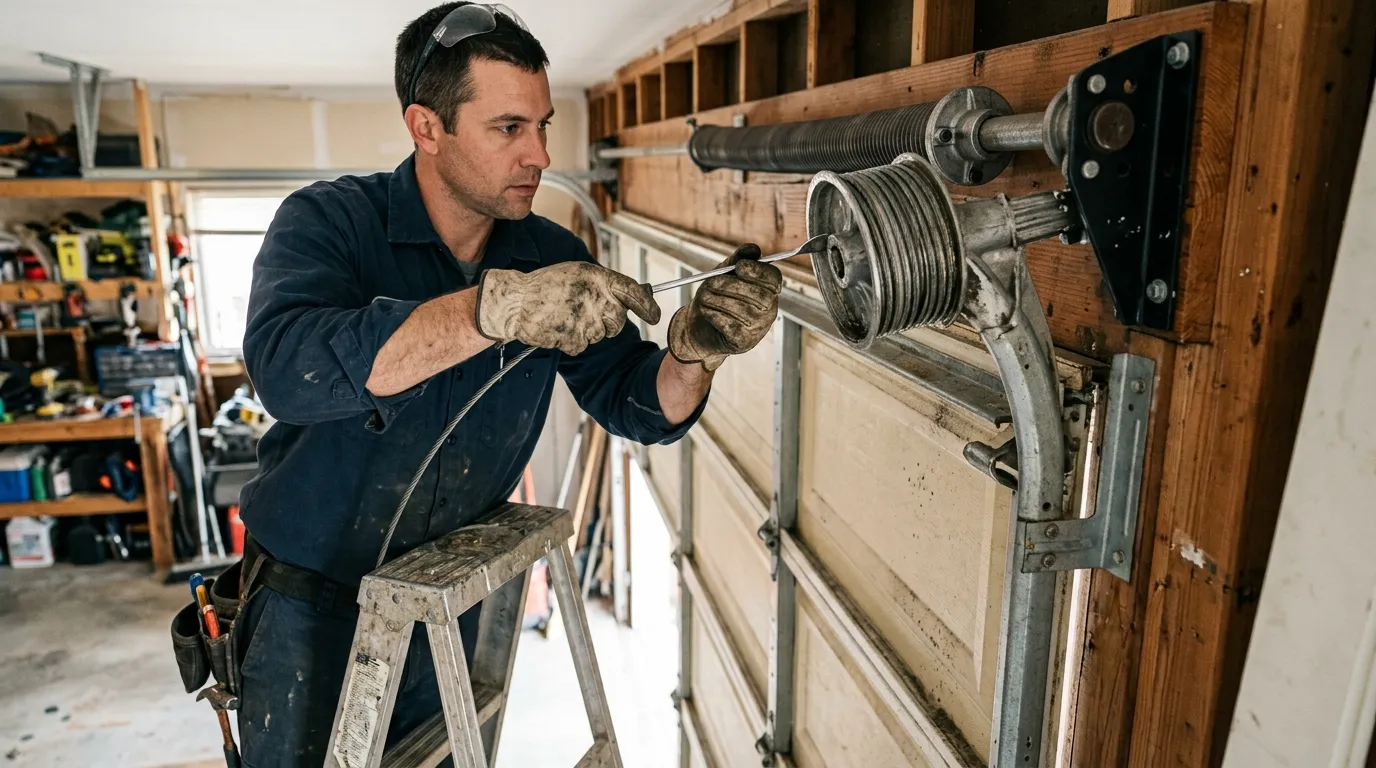
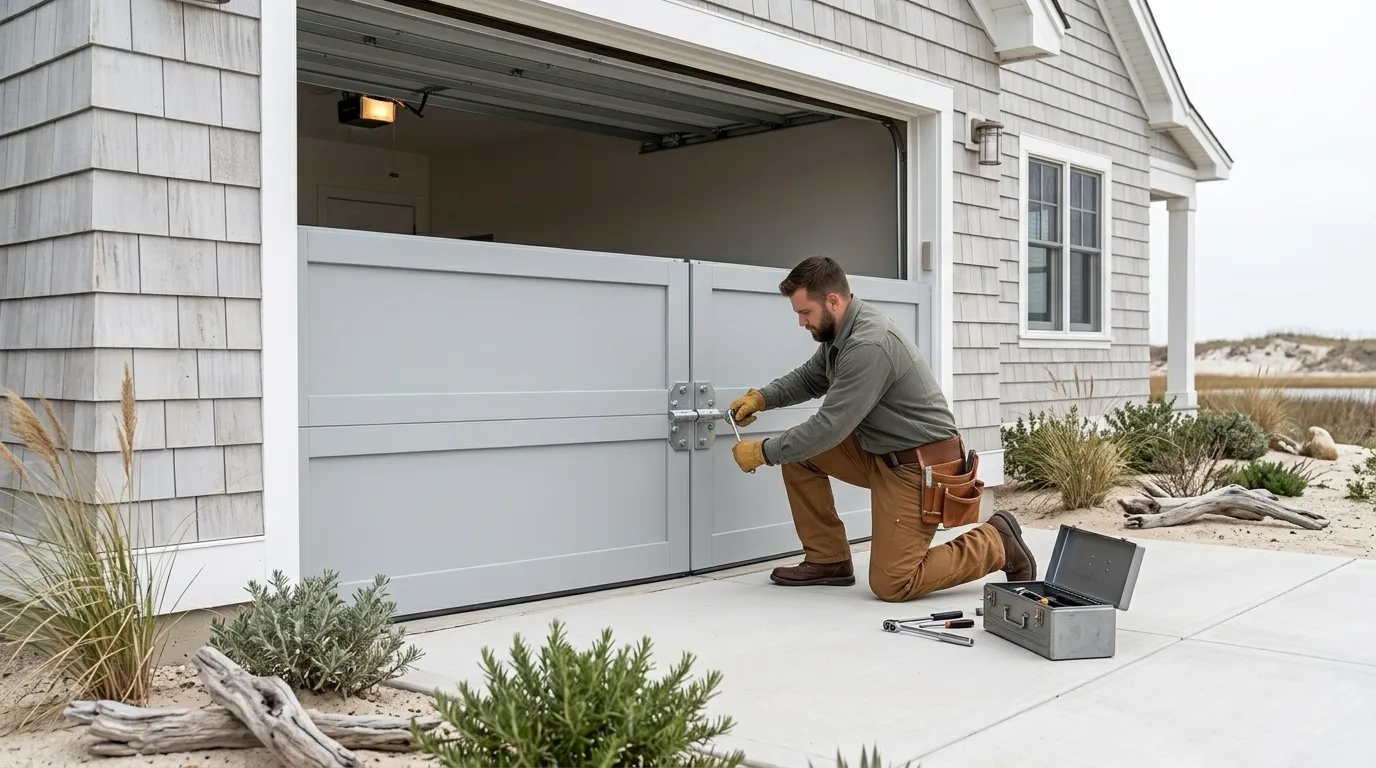
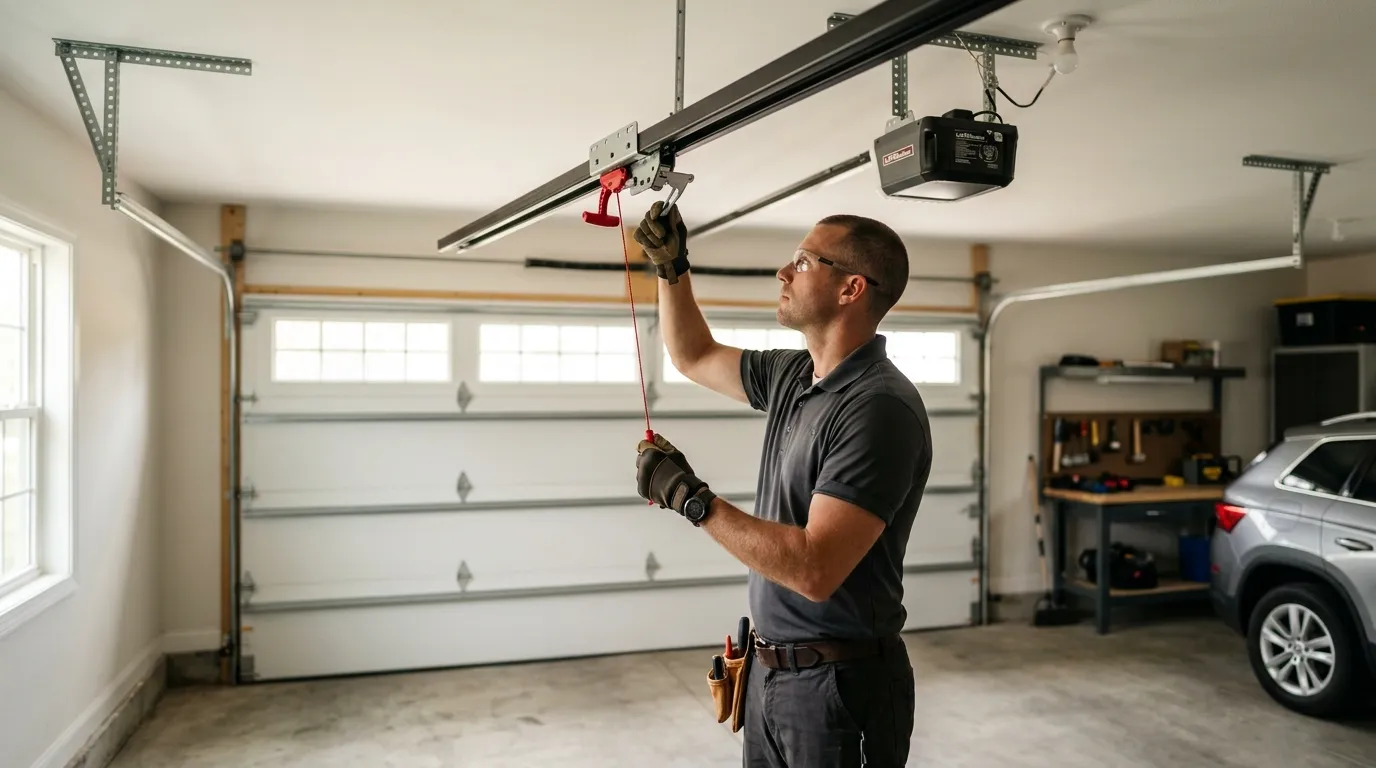
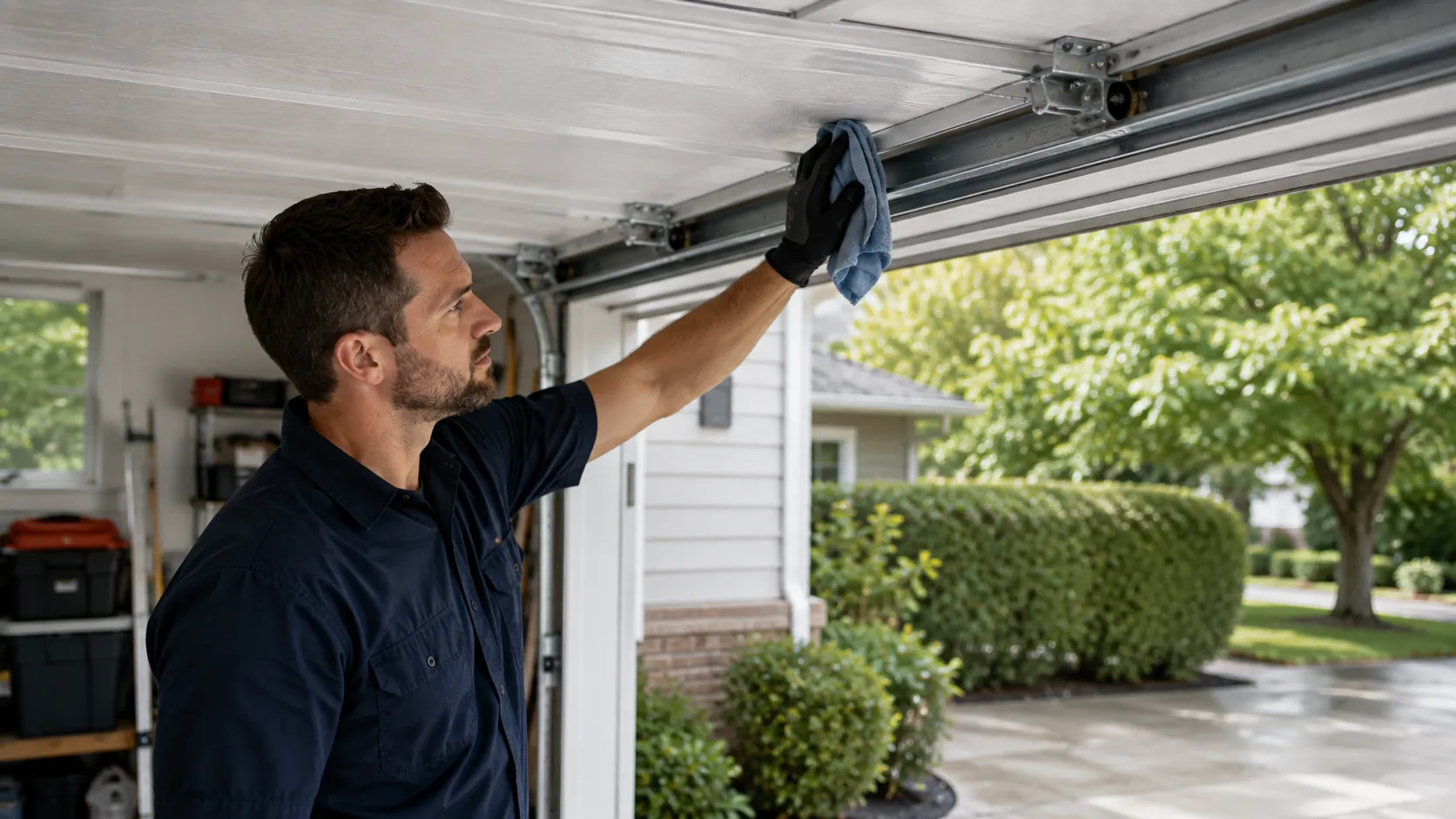
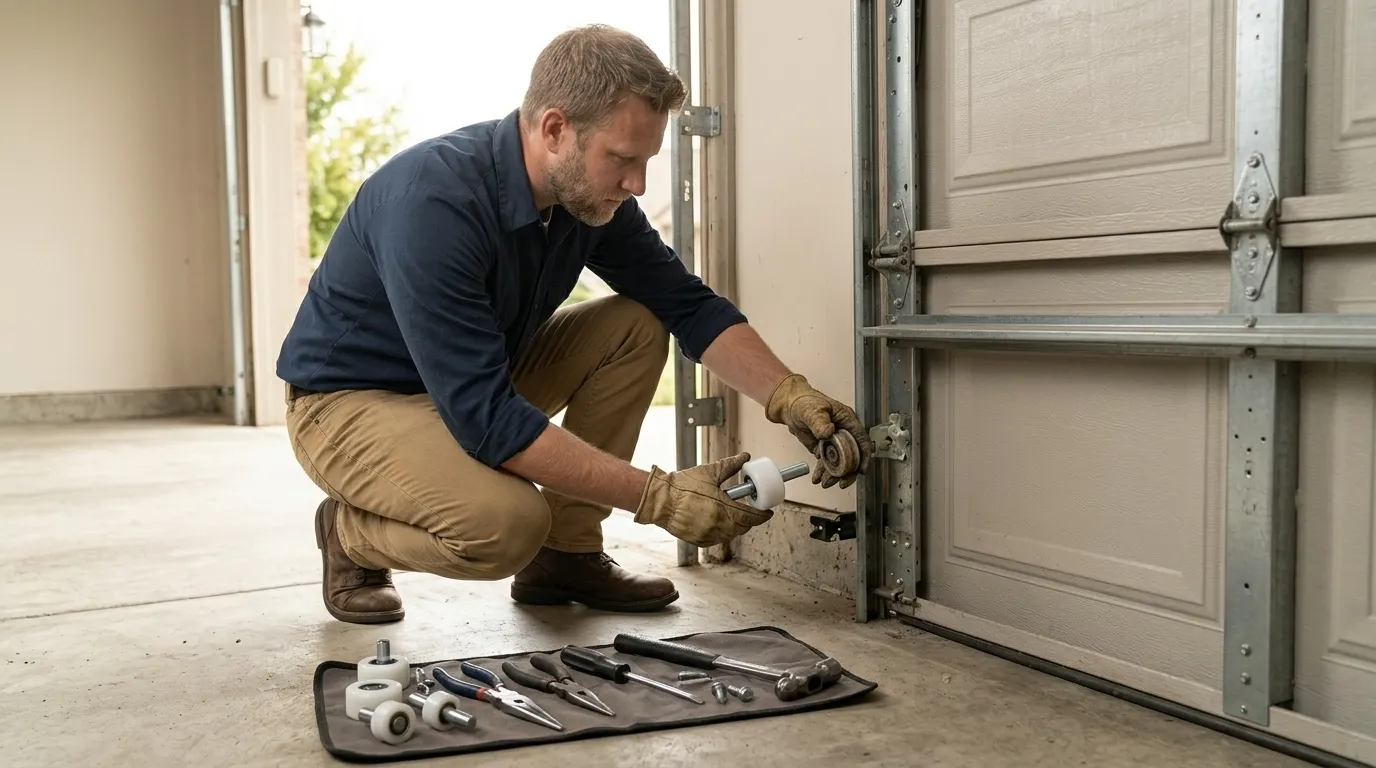
A maintenance visit on an Inwood door usually means checking hardware that's still on its first life. Housing in this stretch of the county went up mostly in the 2000s - the local median build year sits around 2002 - so most doors here are still running original springs, original rollers, original track brackets. The work is lubricating hinges and rollers, checking torsion spring tension against the door weight, tightening loose lag bolts on the track, and testing the auto-reverse safety sensors. On older stock elsewhere in the region you're often replacing corroded hardware outright. Here, it's more often adjustment than replacement - tightening what's loosened, greasing what's dried out, and catching a fraying cable before it lets go. That's a shorter visit and a cheaper one, but it only stays that way if it happens on a schedule instead of after something breaks.
What You Are Seeing
The complaints we hear from this area are usually early-stage: a door that groans on the way up, one that seems to hesitate halfway through the cycle, or a remote that used to work every time and now takes two tries. On 2000s-built houses, that's rarely a structural problem - it's a roller going dry, a spring losing a turn of tension, or a sensor lens that's picked up dust. None of that means the door is failing. It means the door is telling you it's due for the kind of attention it hasn't gotten since it was installed. Left alone, a dry roller wears its track groove faster and a slightly under-tensioned spring puts more strain on the opener motor than it was built to handle.
The Cost of This Job
We don't have a posted price to quote you here, and we'd rather say that than make one up. What we can tell you is what drives the cost on a house like the ones in Inwood: a straightforward lubrication-and-adjustment visit on a 2000s door with original hardware costs less than a visit that turns up a worn cable or a spring that needs replacing outright. Median household income in this area runs around $82,267, and most of the calls we get here are from owners maintaining a door that's worth keeping in good shape, not one that's near the end of its life. That's the calculation worth having with us on the phone before we drive out - what you're seeing, and whether it sounds like adjustment or replacement.
Why This Fails Locally
This area sits in a climate band with severe cold winters, and cold is hard on garage door hardware in specific ways. Lubricant thickens and stops doing its job right when the temperature drops, which is why a door that ran quiet in October starts groaning in January. Steel springs and torsion bars contract slightly in the cold too, which shows up as a door that feels heavier on the opener than it did in summer. On a 2000s-built door, that hardware hasn't been through many winters yet, so the wear is still gradual - but it's real, and it's the reason a yearly maintenance visit before winter matters more here than the age of the house alone would suggest.