What the Fix Involves
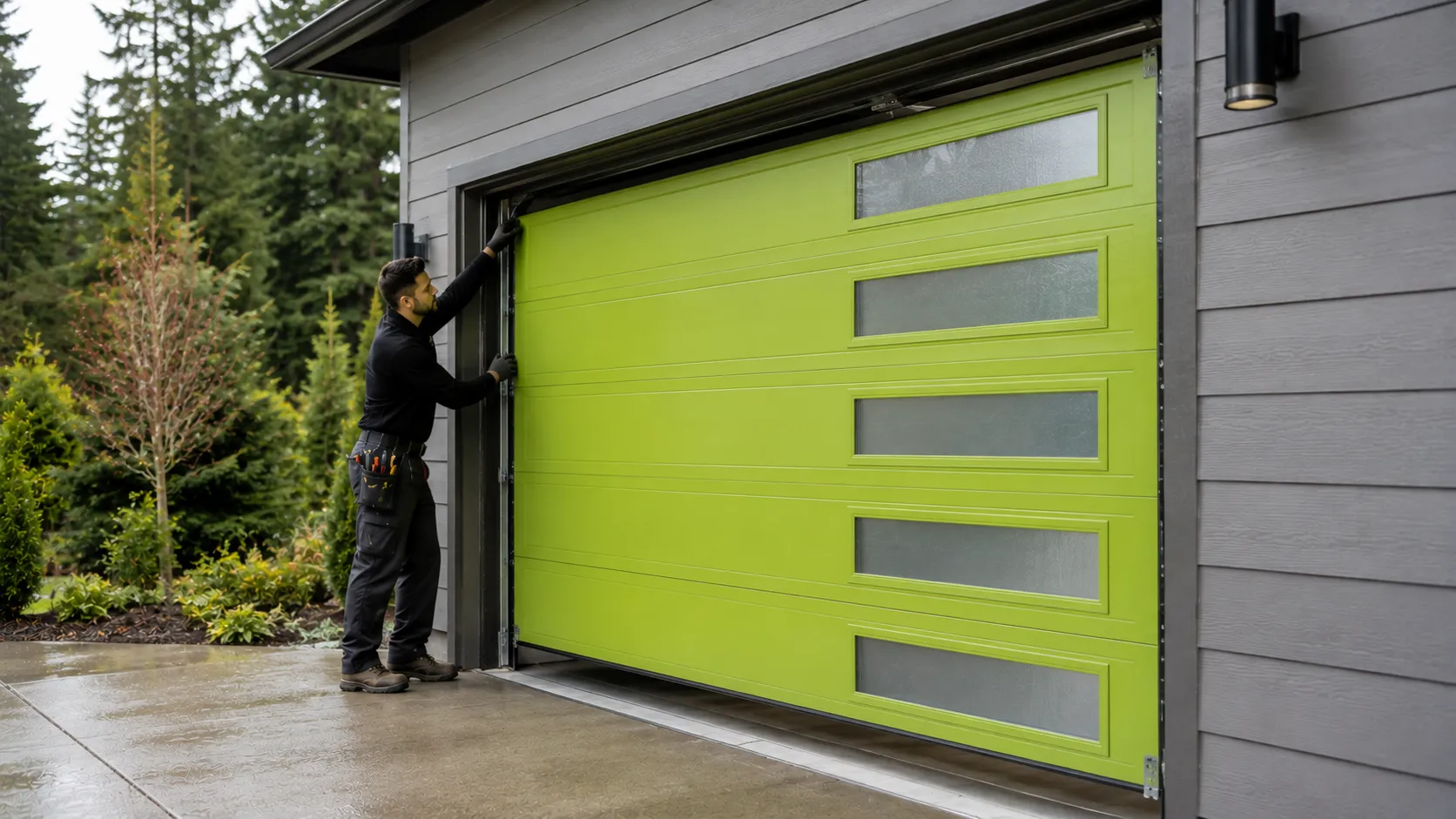
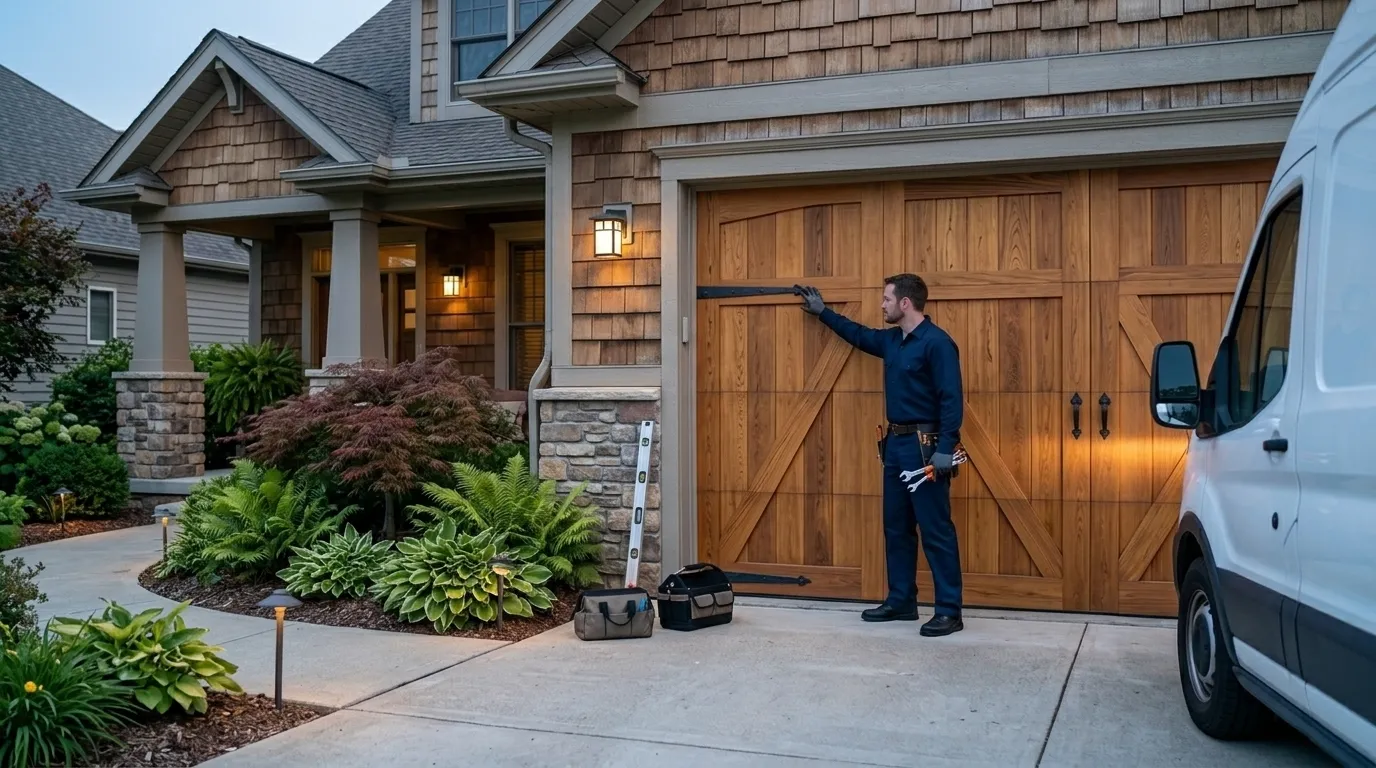
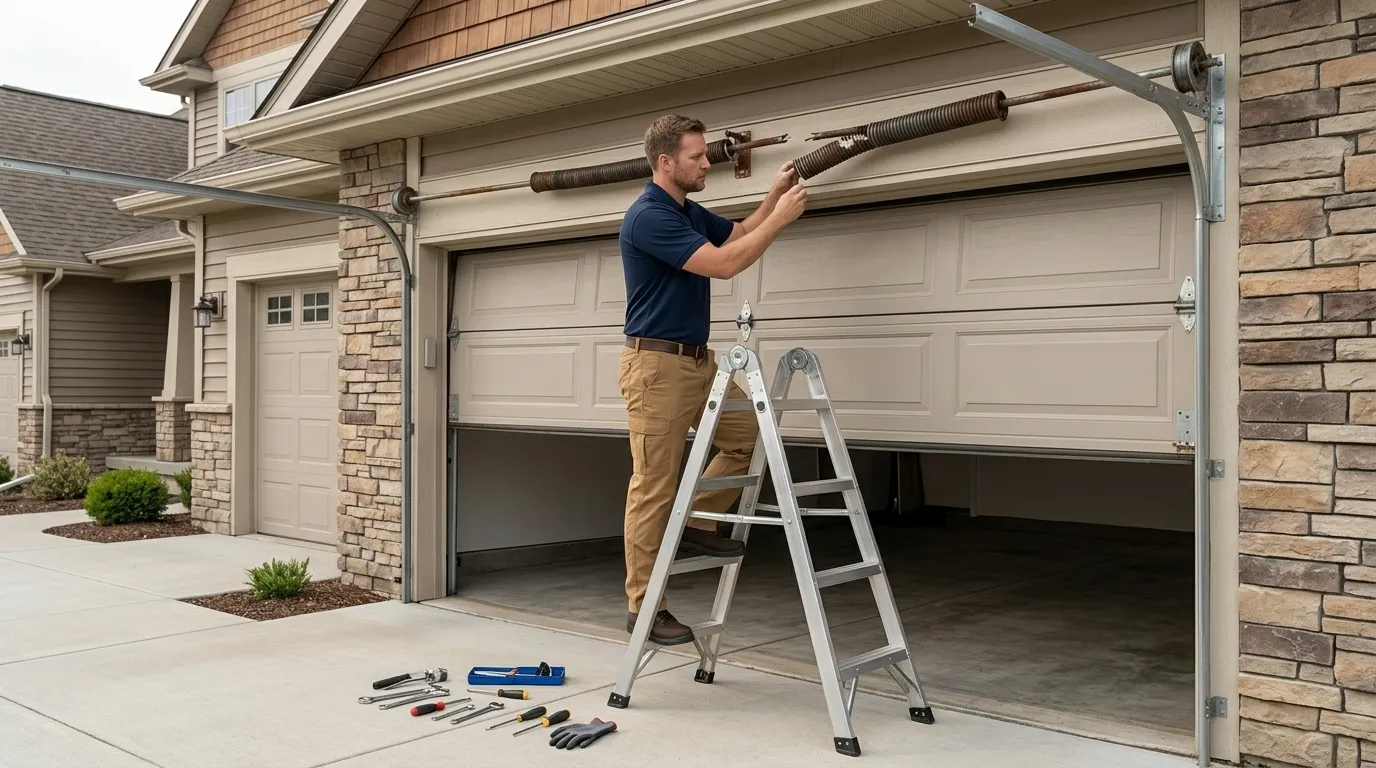
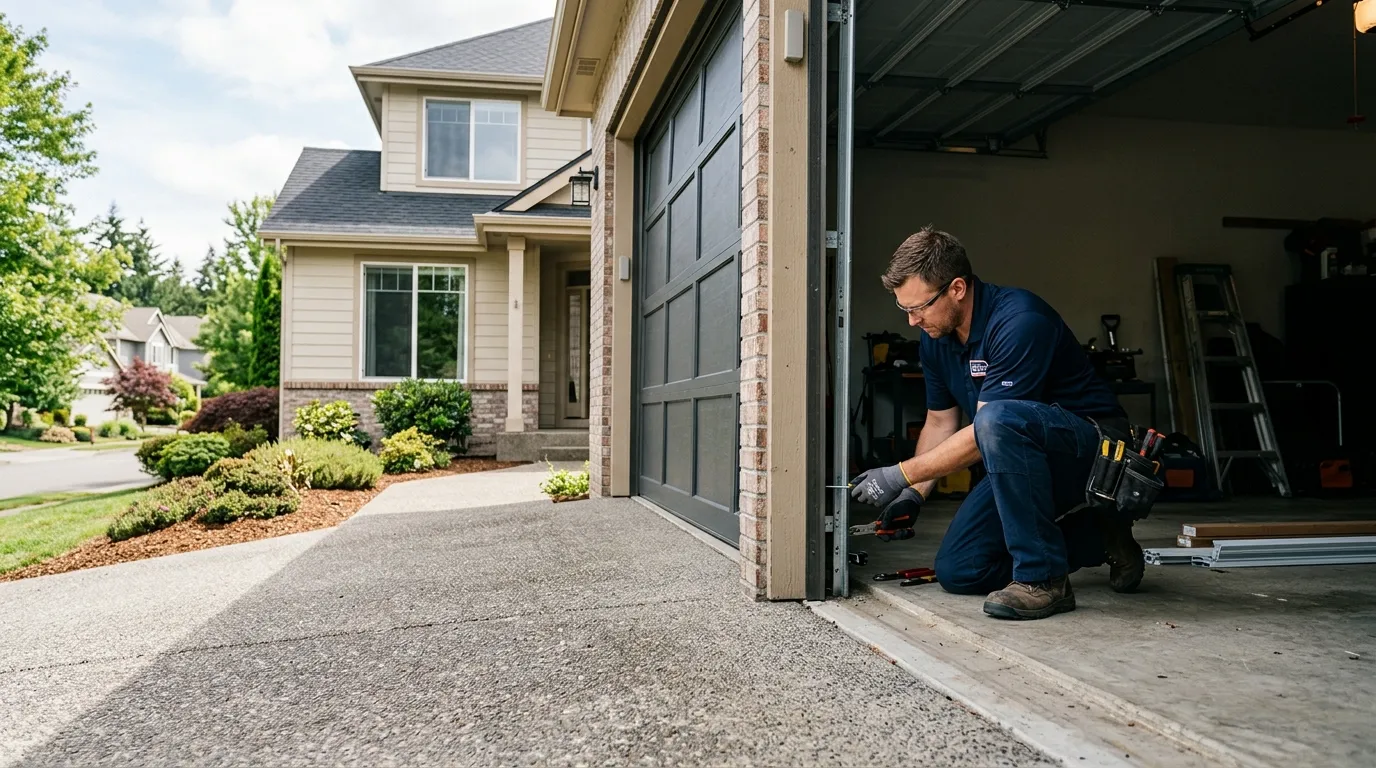
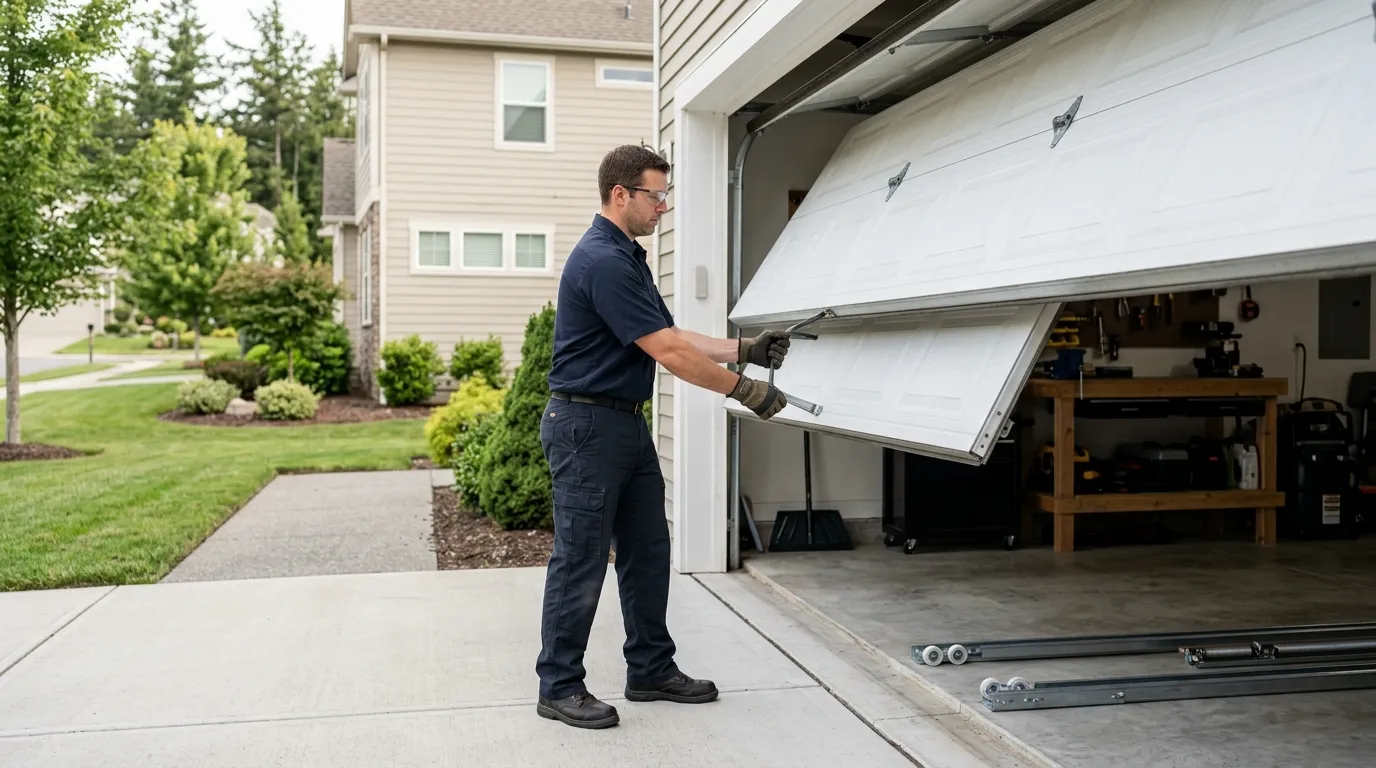
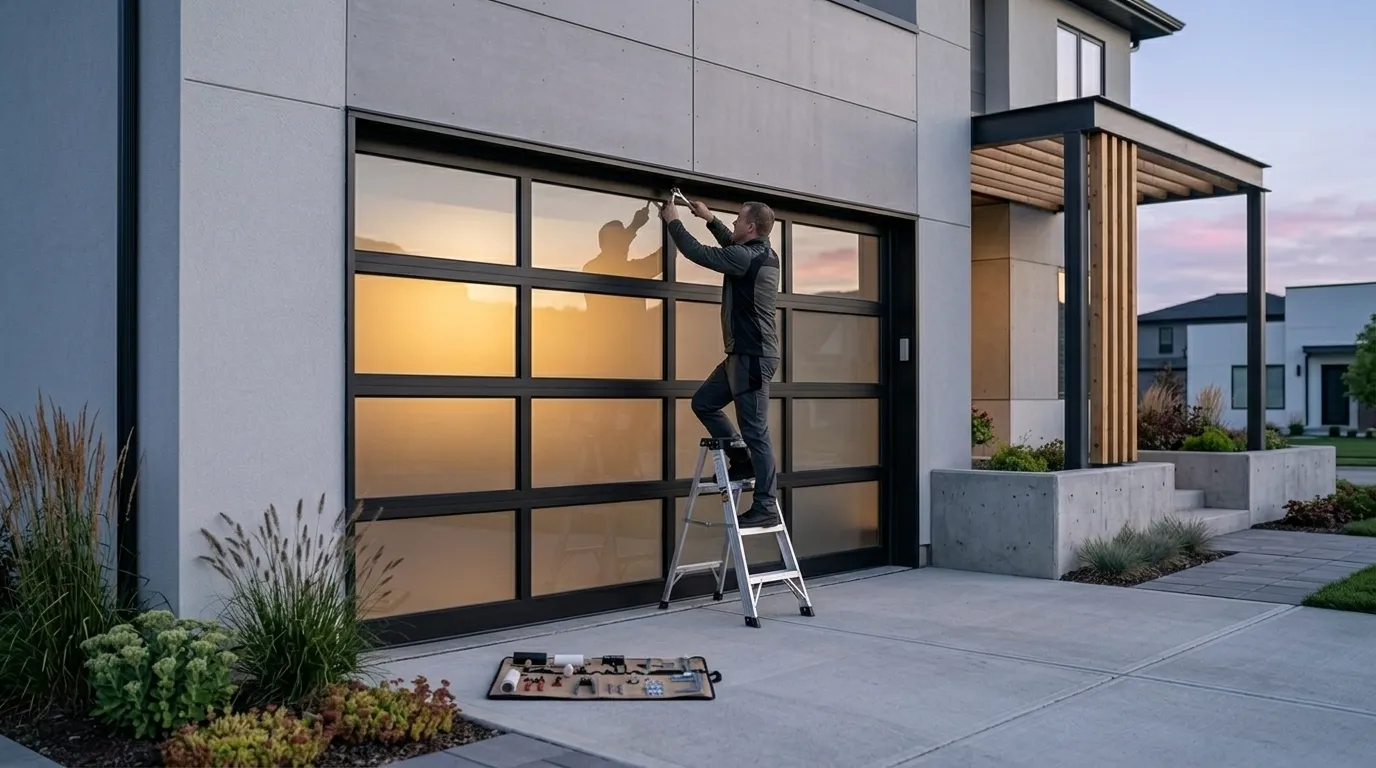
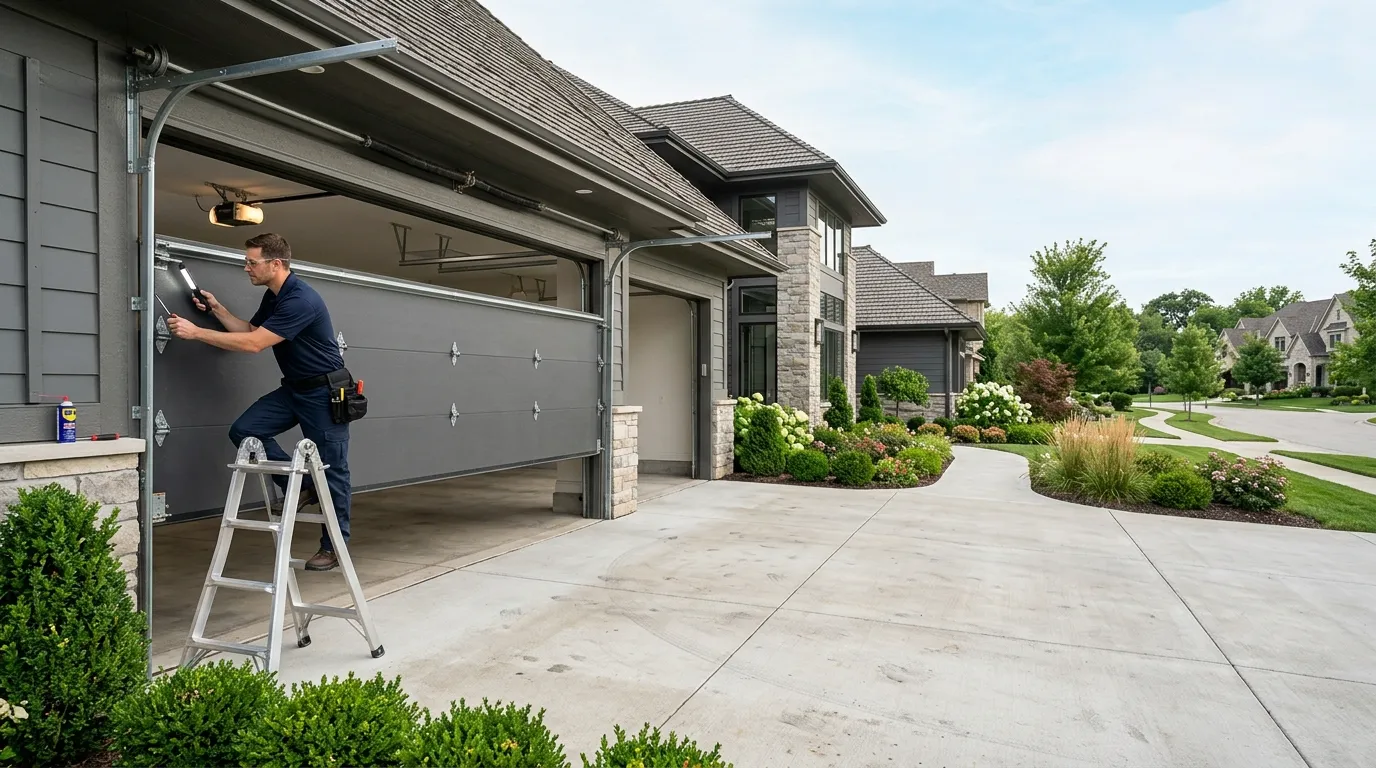
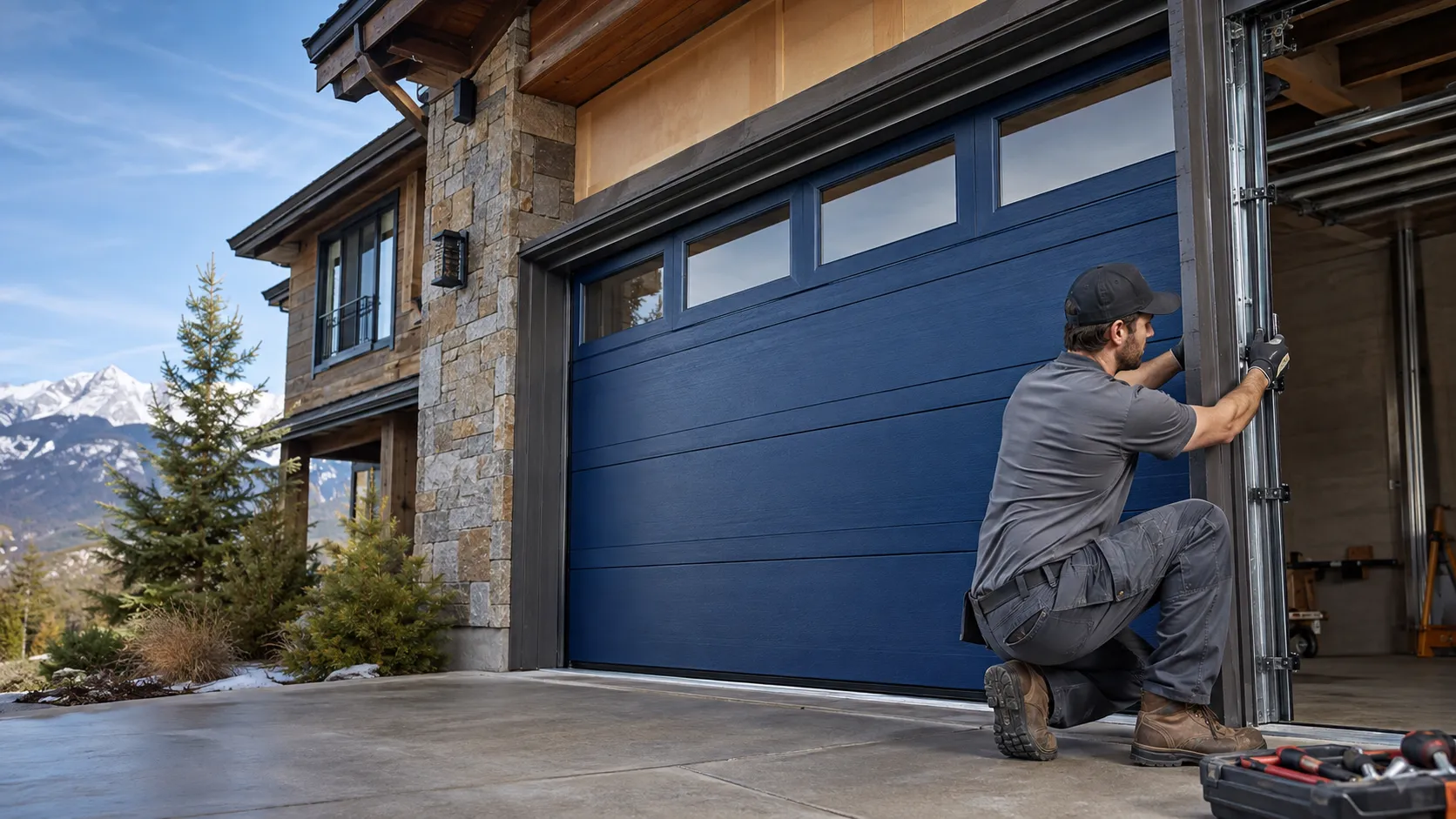
On a house built around 2002, you're typically looking at a sectional steel door on standard 2-inch track with either 7-ball nylon rollers or older stamped-steel rollers, depending on what the original builder spec'd. The fix is straightforward: unwind the tension carried by the door's springs is not touched, but each roller stem gets pulled from its bracket, the old roller comes off, and a new one goes on - nylon almost always replacing steel at this point, since nylon runs quieter and doesn't need the same lubrication schedule.
We also check the track alignment while the rollers are out. On a 2002-era door, twenty-plus years of the same track flexing under a steel door will sometimes bow the rail slightly, and a straight rail matters more once new rollers go in - a bent track will chew through even good rollers fast.
What You Are Seeing
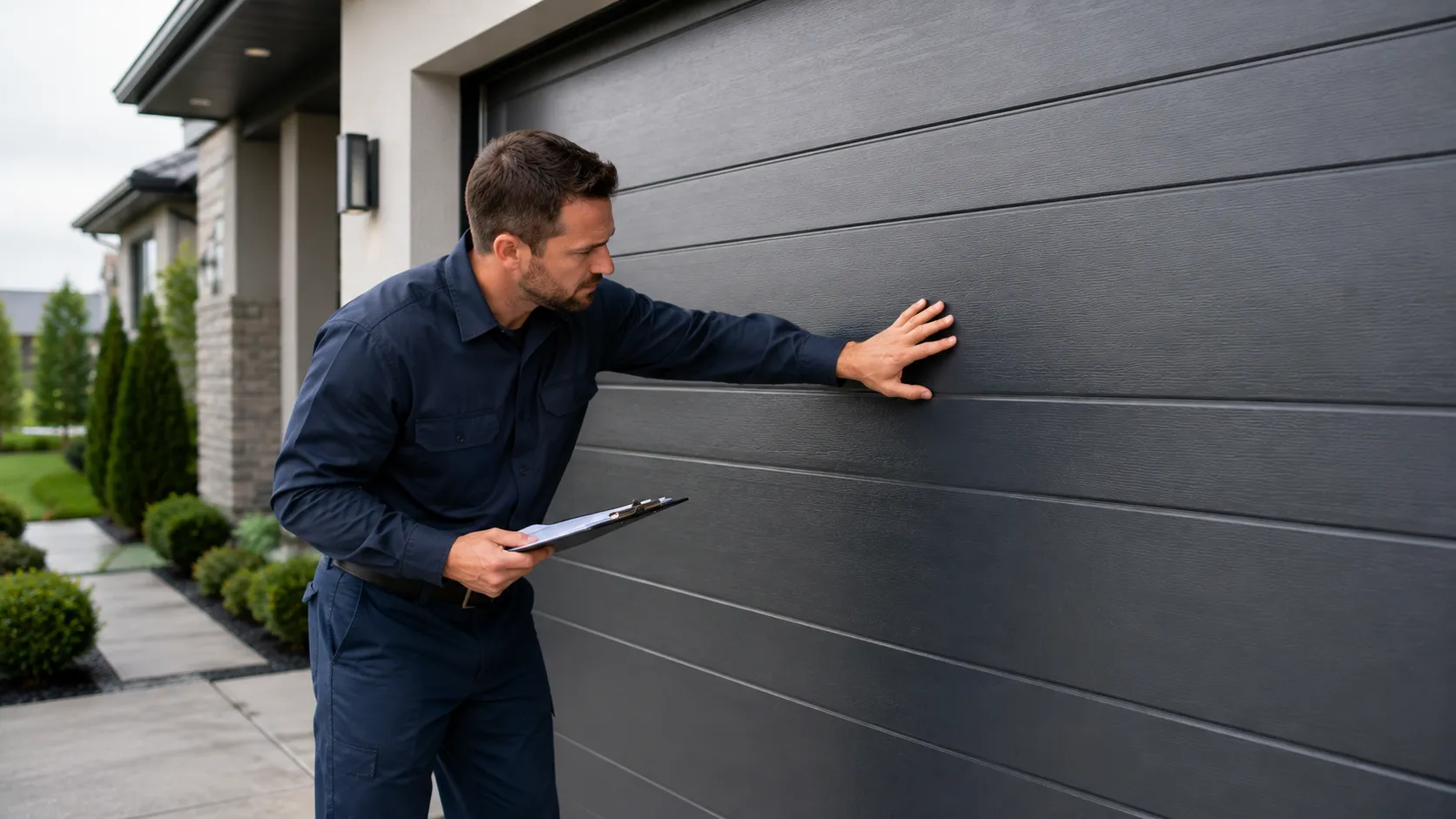
The most common sign in this age of house is a door that jerks or hesitates at roughly the same spot in the travel every time - that's a roller that's developed a flat side and is thumping instead of rolling. A second sign is a door that sounds fine going up but grinds coming down, which usually means a bearing inside the roller has failed and the stem is now dragging metal-on-metal against the bracket.
Because most Inwood doors are around two decades old now, this is close to when original hardware starts to give out regardless of how well the door was used. We're not fixing storm damage or a one-time impact here - it's just the wear you'd expect from a door built in 2002 reaching the point where its original rollers are worn through.
The Cost of This Job
We don't publish a flat number here because roller count, roller grade, and whether track needs correcting all move the price, and quoting a figure without seeing the door risks either underselling or overpromising the job. What we can say: replacing rollers is one of the cheaper garage door repairs there is, well under a spring or opener replacement, and it's rarely worth deferring since a failing roller left alone will eventually damage the track or bracket it rides in, turning a small job into a bigger one.
Why This Fails Locally
This is where Inwood parts from a straight copy of the Martinsburg city page. Martinsburg's housing stock runs older - back to 1938 in parts of the service area - which means a good share of those doors have older torsion hardware and different roller sizing. Inwood's stock skews to the newer end of that same range, with a median build year around 2002, so the roller failures we see here are almost always original 2000s-era hardware finally wearing out, not a mismatched retrofit from an older door.
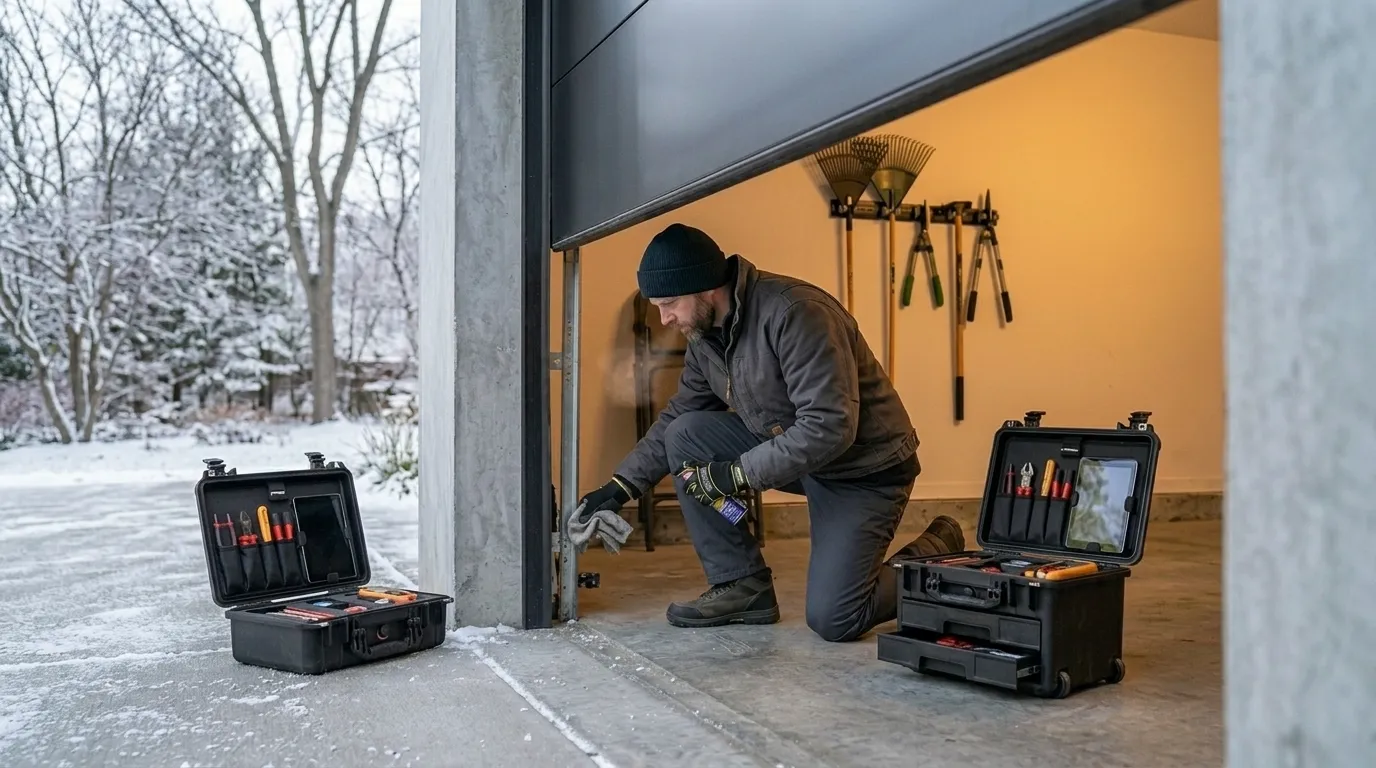
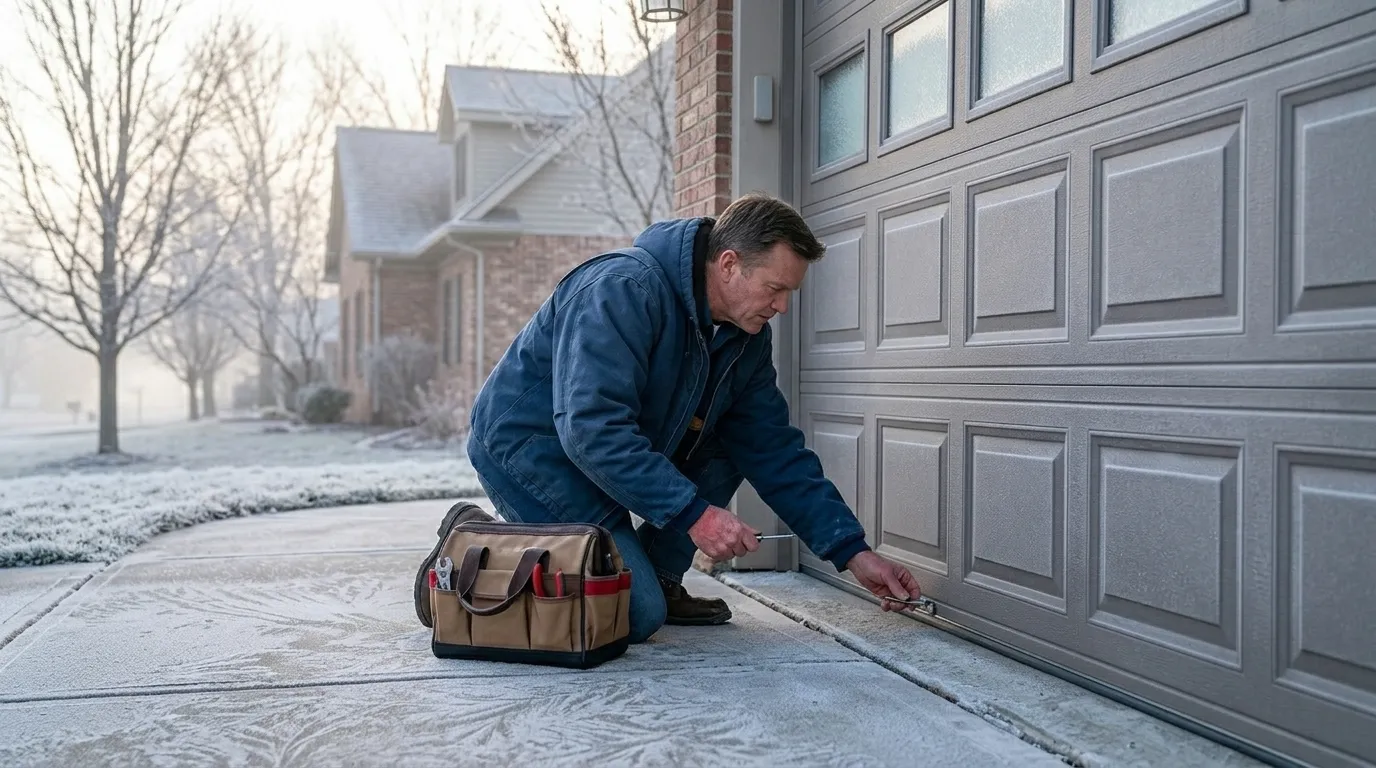
Cold matters here too. This region sits in a severe cold climate band, and steel rollers without sealed bearings stiffen and crack faster in hard winters than nylon ones do. On a door this age, if you're still running the original steel rollers, winter is usually when the flat-spot thump gets loud enough to notice. That's a climate-driven failure pattern tied to the build era, not a generic garage door problem that shows up the same everywhere.